
Joseph Haydn
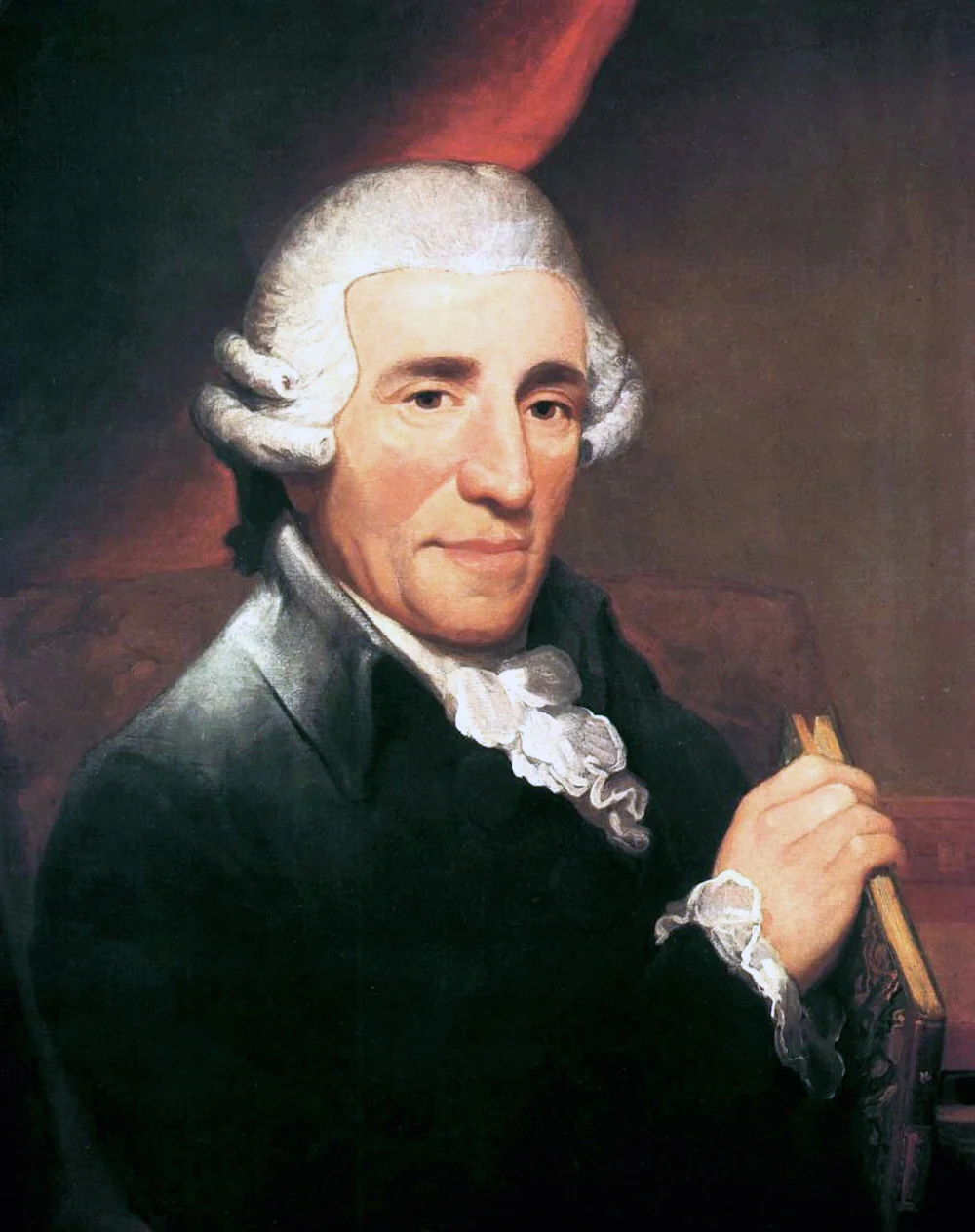
Image from Wikipedia
Image from Wikipedia
Joseph Haydn – Architect of the Viennese Classical Era and Pioneer of Modern Music
A Life between Court Orchestra and World Fame: How Joseph Haydn Shaped the Symphony and String Quartet
Franz Joseph Haydn (1732–1809) is one of the defining figures of the Viennese Classical period. As court conductor for the Esterházy princes, he shaped sound, repertoire, and ensemble culture over decades—far from metropolitan centers yet in constant dialogue with Europe’s musical currents. His stays in London later catapulted him to the forefront of the European music world. With a visionary sense for form, melody, and dramaturgy, Haydn developed the symphony and string quartet into fully-fledged genres and laid the foundations for the classical orchestral and chamber music tradition. His oratorios “The Creation” and “The Seasons” as well as the “Imperial Anthem” mark highlights of a musical career that exemplary unites artistic development and stylistic boldness.
Biography: From Rohrau to Vienna – The First Steps of a Sound Creator
Haydn was born on March 31 or April 1, 1732, in Rohrau, Lower Austria, and sang as a boy in St. Stephen's Cathedral in Vienna. After years as a freelance musician—shaped by lessons, copying scores, occasional jobs, and intensive self-education—he found his path in positions within noble households. His talent as a composer, arranger, and orchestra leader soon emerged, along with a pronounced stage presence in the service of impactful performances. This early period sharpened his understanding of instrumentation, vocal technique, and ensemble balance, preparing him for his later role as a conductor.
Crucial was his appointment by the Hungarian princely house of Esterházy. In the court music, Haydn found a stable yet demanding environment, where he managed orchestra, chamber music, and opera alike. The relative isolation from Vienna’s bustling cultural life fostered experiments in composition, form, and sound dramaturgy—a laboratory in which he developed his unmistakable idiom.
Esterházy Years: Conductor, Opera Director, and Inventor of New Sound Dramaturgies
As a court musician at the Esterházy residences—among them Eszterháza—Haydn led the orchestra and opera troupe, composed stage works, chamber music, divertimenti, and a wealth of symphonies. Here, his music career took shape: regular rehearsals, precise arrangements, and bespoke repertoire for the resident virtuosos. Artistic development is evident in the gradual expansion of the sound spectrum: solo wind colors, dynamically accented tutti, contrapuntal densifications, and humor as a compositional device—such as surprising general pauses, harmonic tricks, or formal expectations that he virtuously subverts.
These workshop conditions led to a profound understanding of orchestral possibilities. Haydn refined the writing technique, developed thematic and motivic work, and perfected the “sonata form” as dramatic architecture with exposition, development, and recapitulation. His opera practice also sharpened his instinct for lyrical lines and dramatic effects, which later culminated in the oratorios and late masses.
London Triumphs 1791/92 and 1794/95: International Success and the "London Symphonies"
Haydn’s travels to London marked a breakthrough on the international scene. In the bustling metropolis, he encountered an audience eager for grand symphonic works, powerful impresarios, and ensembles capable of bringing his advanced scores to vibrant life. It was here that the "London Symphonies" were created—works that deepen orchestral colors, condense thematic work, and charge formal dramaturgy with surprising twists.
The success in London affirmed Haydn’s authority as a composer and conductor. He flexibly responded to hall sizes, instrumentations, and listening habits, unfolding a sound discourse that reached both experts and enthusiasts. The mature orchestration, confident harmonies, and precise articulation characterize this late phase and showcase Haydn as an artist of European stature.
Late Mastery in Vienna: "The Creation", "The Seasons" and the "Imperial Anthem"
After returning from England, Haydn spent his later years in Vienna, where he created two oratorio peak works: "The Creation" (1798) and "The Seasons" (1801). The combination of symphonic splendor, choral richness, picturesque instrumentation, and clear text declamation documents Haydn’s expertise in composition, arrangement, and production. Sound-painting effects—from the chaos of the opening to the idyllic portrayal of nature—combine theatrical gesture with scientifically sharpened order of form.
In 1797, Haydn set the "Imperial Anthem" ("God Save Franz, the Emperor") to music, whose melody later became the German national anthem with a different text. This song epitomizes Haydn's ability to unite catchy melody, symbolic richness, and compositional rigor. It presents him as an artist who reflects the societal functions of music and employs musical semantics with precision.
Overview of Works and Discography: Symphonies, Quartets, Oratorios, Operas
Haydn’s discography is—despite the historical period of its creation—one of the most extensive in the classical catalog. The 104 numbered symphonies, the major string quartet cycles (including op. 20, op. 33, op. 50, op. 76), his late oratorios, numerous masses, as well as operas and piano sonatas form an oeuvre that defines the genre history of the classical era. The quartets particularly function as a laboratory for motivic development, contrapuntal density, and chamber music rhetoric, while the symphonies balance orchestral dramaturgy with wit, seriousness, and dramatic surprises.
In recording practice, complete recordings and thematic cycles are among the reference projects. The London Symphonies frequently reappear within prominent cycles, often featuring historically informed performance practices, modern ensembles, or hybrid forms. Reissues, remasterings, and thematic collections keep Haydn’s music present in catalogs and create well-defined accents in reception.
Style, Composition, Sound Language: Haydn’s Innovative Power
Haydn's stylistic poetics are based on economical motives, dialogic voice leading, and precise formal dramaturgy. From small seeds grow thematic fields that unfold logically yet can break with surprise. The periodicity remains flexible, the harmony fluid, and the rhythm gains profile through syncopations and unexpected accents. Tones are not only used decoratively but functionally: wind lines carry formal transitions, string patterns model energy, and pauses structure expectation.
His artistic development shows a continuous densification of writing technique. Early divertimento-like cheerfulness leads to a late monumental quality that never feels cumbersome. In the string quartet, Haydn creates a chamber music discourse on equal footing; in the symphony, he designs expansive narrative arcs that unite humor, drama, and learned art. This expertise in composition and arrangement establishes Haydn’s undisputed authority in music history.
Cultural Influence and Legacy: From Beethoven to the Present
Haydn’s authority had a direct impact on the next generation: Beethoven studied with him, and Mozart encountered him in both collegial and admiring relationships. Haydn’s work set benchmarks for treatment of form, thematic work, and orchestral balance, which composers of the 19th century learned from. His contributions to the genres shaped European concert culture, from symphonic program dramaturgy to chamber music discourse.
To this day, Haydn’s scores influence programming, research, and performance practice. Historically informed ensembles, modern orchestras, chamber music festivals, and university projects examine his works from varying perspectives. Discourse and practice go hand in hand: new editions, critical complete editions, and scholarly symposia promote a detailed understanding of his compositional strategies—and illustrate why this music still feels so vibrant on today’s stages.
Current Reception, Editions, and Performance Practice (2024–2025): Recordings, Festivals, Research
In the years 2024 and 2025, Haydn continues to assert his presence in the classical scene. New complete and thematic editions consolidate his symphonic, oratorial, concert, and chamber music works in comprehensive boxes; renowned labels and dealers offer extensive Haydn editions in their catalogs. Concurrently, new recordings of individual works—from violin concertos to thematically curated symphonies—document interpretive developments. These releases emphasize the continuing appeal of Haydn’s discography for collectors and new listeners alike.
Festivals, academic institutes, and foundations dedicate their own series, concerts, and research projects to Haydn. Symposia illuminate stylistic aspects such as character-symphony, edition techniques, and source criticism; university productions present innovative interpretative approaches to "The Creation" or thematic programs that reveal Haydn's progressive sides. Competitions and concert series in his birthplace region keep the engagement with Haydn's vocal and instrumental works alive.
In the music press, Haydn productions and programs consistently resonate—such as when orchestra projects concerning late symphonies or oratorios receive special awards. Radio broadcasts, label news, and curatorial contributions anchor Haydn in the present and show that his music—thanks to interpretive diversity and editorial diligence—speaks in many aesthetic languages today.
Conclusion: Why Joseph Haydn Remains Indispensable Today
Joseph Haydn is the great architect of the classical era: he transformed the symphony into a dramatic cosmos and gave voice, balance, and intellectual tension to the string quartet. His music combines individual invention with structural clarity—a craft that resonates from the chamber music hall to the grand oratorio stage. Anyone who listens to Haydn experiences the birth of modern musical narratives: precisely composed, rich in wit and emotion, and open to surprises.
His works unfold their full effect live: the buoyant rhythm, the colorful orchestration, the artful voice leading. Attend concerts featuring Haydn’s symphonies, quartets, or oratorios—and discover how this music, born between court orchestra and world stage, continues to shine even today. Haydn’s sound discourse feels timeless, and his inventiveness is contagious: a master whose art inspires the present.
Official Channels of Joseph Haydn:
- Instagram: No official profile found
- Facebook: No official profile found
- YouTube: No official profile found
- Spotify: No official profile found
- TikTok: No official profile found
Sources:
- Wikipedia – Joseph Haydn
- Encyclopaedia Britannica – Joseph Haydn: Biography, Compositions & Facts
- Wikipedia – Die Jahreszeiten (Haydn)
- Deutsche Welle – Haydn Project Celebrated at the Opus Klassik Awards (15.10.2024)
- jpc – Joseph Haydn: Haydn Edition (Brilliant Classics 2025)
- Presto Music – New Release Round-Up (20 June 2025)
- Haydn, the Progressive – Outlook 2024 (Joseph Haydn Private University)
- Haydnregion Lower Austria – Classical Festival Overall Program 2025
- HaydnBio.org – Biography and Research
Upcoming Events
HAYDN ORGELSOLOMESSE at Patrona Bavariae
J. Haydn: The Creation
Grant us strength and courage
And there was light
And there was Light – Haydn's The Creation in the Friedenskirche
Paukenmesse in Freising Cathedral: Haydn Concert with Cathedral Choir and Cathedral Orchestra
Joseph Haydn: The Creation
Festival Concert in the Francis Year: Joseph Haydn - The Creation
Haydn: Seasons for Kids