
Johannes Enders
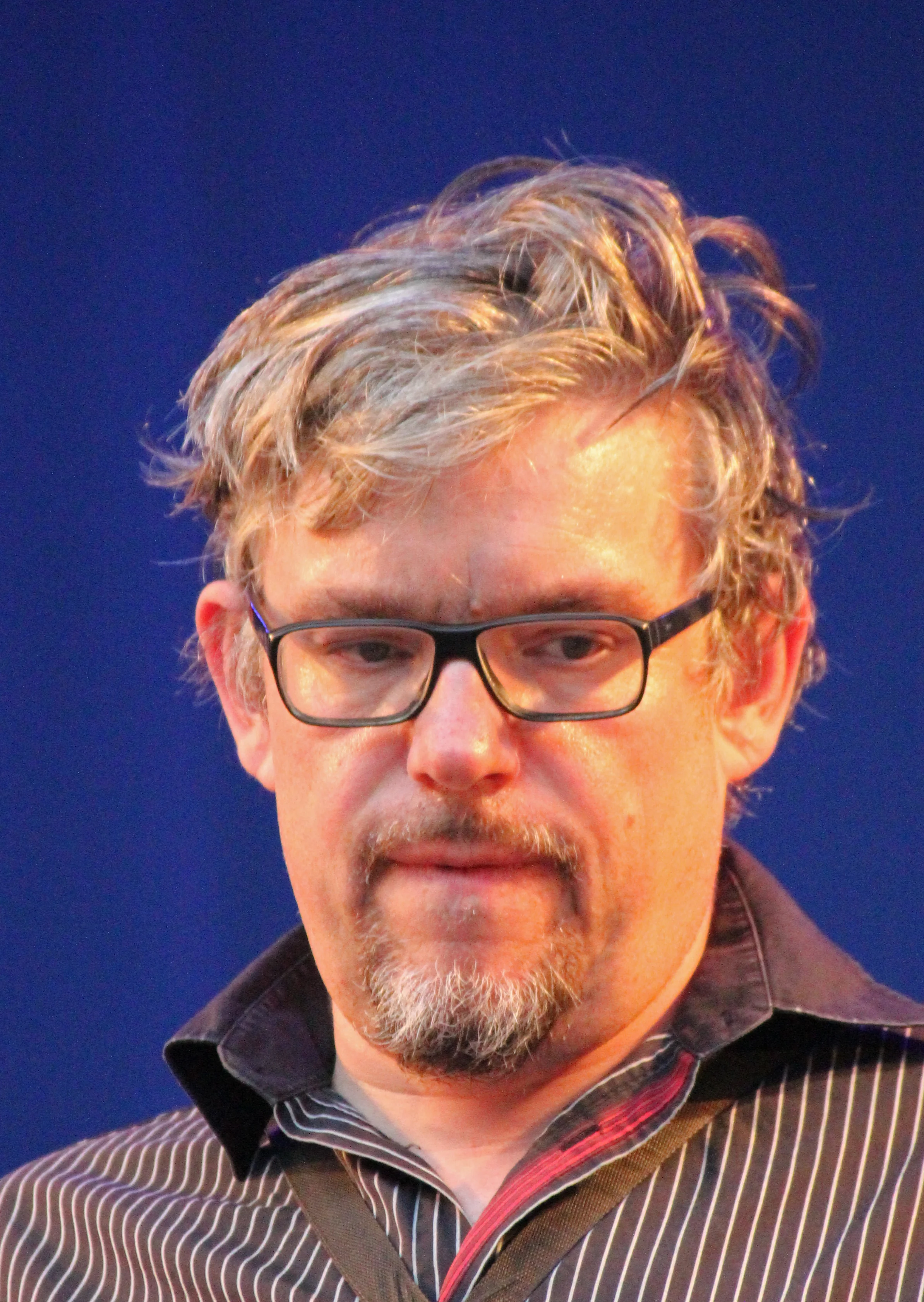
Image from Wikipedia
Image from Wikipedia
Johannes Enders – Germany's Defining Voice on the Tenor Saxophone
From Weilheim to the World: The Impressive Music Career of a Jazz Saxophonist Straddling Tradition, Innovation, and Electro-Jazz
Johannes Stefan Enders, born on May 12, 1967, in Weilheim in Upper Bavaria, is among the most influential jazz saxophonists of his generation. His artistic journey leads from a classically trained instrumentalist to an internationally connected improviser, composer, and producer, whose stage presence and stylistic openness set standards. Early on shaped by soul, funk, and modern jazz, Enders developed a distinctive tone and a storytelling art on the tenor saxophone that combines emotionality with structural clarity. Today, as a professor in Leipzig, he merges pedagogical authority with an active, versatile career in the studio and on international stages.
Biographical Roots and Education: From Music School Big Band Saxophone to International Jazz
Growing up in Weilheim, Enders was already playing in the music school's big band in the early 1980s and formed his first band with school friends Micha and Markus Acher – who later became influential in The Notwist. After foundational studies in Munich, he transferred to the jazz department of the University of Music and Performing Arts in Graz in 1988. A decisive career step followed in 1990 with the recommendation of Coltrane bassist Reggie Workman to the New School in New York. There, Enders deepened his expertise with mentors including Dave Liebman, Jerry Bergonzi, Lee Konitz, Branford Marsalis, Donald Byrd, Kenny Werner, Jimmy Cobb, and Jim Hall – encounters that significantly shaped his tonal aesthetics, phrasing, and improvisational architecture. After a formative stay in South Africa, he returned to Germany and quickly established himself as a prominent voice of the European tenor saxophone.
Career Path and Professorship: Authority Between Stage and Academy
Since the 1990s, Enders has developed an independent artistic signature as a bandleader alongside his work as a sideman. In 2008, he accepted a professorship for jazz saxophone at the Hochschule für Musik und Theater "Felix Mendelssohn Bartholdy" Leipzig – a position that further underscored his authority in German-speaking jazz. His teaching visibly influences the production, arrangement, and ensemble work of his projects: tonal balance, thematic economy, and a visible reflection on form and sound design shape his studio albums as well as live concerts.
Breakthrough, Awards, and Recognition: EEAT in Practice
Enders' discography documents his experience and expertise across numerous ensembles – from acoustic quartets to saxophone ensembles and electroacoustic laboratories. Renowned awards attest to his recognition by both the professional world and audiences: including the SWR Jazz Prize (2003), the Echo Jazz for best national saxophonist (2012), and the German Music Authors' Prize (2012, with Tied & Tickled Trio). These awards not only mark milestones in a musical career but also attest to the reliability and consistency of his artistic work over decades.
Selected Discography and Development Axes: From Straight-Ahead Jazz to Enders Room
Early recordings like "Reflections of South Africa" (1992) portray Enders as a curious sound explorer navigating between post-bop vocabulary, South African rhythms, and lyrical melodies. This is followed by Enja releases such as "Home Ground" (1996), "Bright Nights" (1998), and "Quiet Fire" (1999), which place the tenor saxophone at the center of clearly structured compositions. With "Soprano" (2004, Pirouet), he expands the sonic spectrum with soprano tonal qualities, intricate textures, and chamber musical interaction. Simultaneously, "Enders Room," as an electro-jazz project, opens the sound cosmos towards electronica, dub aesthetics, and beat culture – in the tradition of Bugge Wesseltoft or The Cinematic Orchestra, but always infused with Enders' personal tonal poetry. Later works like "Endorphin" (2018) condense his compositional style between groove impulses, melodic storytelling, and tonal richness.
Band Ecosystems and Collaborations: Tied & Tickled Trio, The Notwist, and International Alliances
A core of his artistic development lies in collectives that intertwine jazz, indie, and electronics. With the Acher brothers, Enders is involved in the Tied & Tickled Trio – a laboratory blending jazz improvisation, post-rock textures, and studio production. As a guest and band musician, he also shapes albums and tours with The Notwist, Billy Hart, Franco Ambrosetti, and many others. These collaborations broaden his musical grammar: polyrhythmic layers, modular forms, soundscapes, and an organic integration of electronics into acoustic ensembles are now part of his repertoire of possibilities.
Current Projects 2024–2026: Homage, Trio Spirit, and New Music
With "The Creator Has a Masterplan B (A Tribute to Pharoah Sanders)," Enders is set to deliver an artistic statement at the end of 2024 that intertwines spiritual jazz, personal homage, and compositional independence. The trio with Joris Teepe (bass) and drum legends Billy Hart or Gene Calderazzo builds a bridge to Pharoah Sanders’ work in new original compositions, avoiding epigonal tendencies – a production set for release through Enja Records on December 20, 2024, which resonated across Europe in the jazz press. In 2025, the trio presented the program live, including performances in Leipzig, thus continuing Enders’ long collaboration with Billy Hart. On January 9, 2026, a new single release titled "Why" follows, showcasing Enders’ lyrical storytelling in a compact form – a contemporary production with warm tenor sound, focused arrangement, and clear dramaturgy.
Concept and Sound Language: Tonal Culture, Form Awareness, and Spirit
Enders’ playing lives from a physical yet controlled tone, switching between robust depth, overtone-rich brilliance, and breathing phrasing on the tenor saxophone. His improvisations frequently develop from a melodic seed, which he subsequently varies rhythmically and shifts harmonically. In production, he prefers transparent mixes that make interaction audible: bass lines float "in the air," drum patterns respond instead of just driving, and the saxophone narrates – sometimes raw, sometimes silky – through clearly drawn formal arcs. This spirit also shapes his homage to Pharoah Sanders: energy, space, and thematic economy instead of mere virtuosity.
Style Analysis and Historical Context: Between Hardbop Heritage, Spiritual Jazz, and Electronics
In the historical framework, Enders connects influences from Charlie Parker, John Coltrane, and the soul and funk aesthetics of the 1970s with European sound culture. His projects reflect the hardbop legacy in contemporary articulation, integrating modal fields, ostinati, and soundscapes of spiritual jazz, while Enders Room opens a gateway to beat science, loops, and granular sound design. This hybrid competence – composition, arrangement, improvisation, and production – gives his discography relevance for the present: jazz as a living, permeable art form.
Cultural Influence and Networks: Teaching, Scenes, Labels
As a professor in Leipzig, Enders shapes generations of young saxophonists through practical aesthetics, technical reflection, and repertoire development. His label history – including Enja, Pirouet, Laika, Ammerton – reflects an open yet careful curation of his releases. In the scene, Enders acts as a bridge-builder: between indie collectives, jazz institutes, and festival stages, he connects musicians, listeners, and movements. His recurring collaborations with Billy Hart, Oliver Kent, Gene Calderazzo, and Joris Teepe demonstrate an understanding of band ecosystems, where trust, sense of time, and dynamics become aesthetic constants.
Reception and Awards: Reviews, Rankings, Media Charts
The tribute to Pharoah Sanders appeared in European jazz media charts in 2024 and received strong resonance for its concept, honoring Sanders’ spirit without falling into quoting aesthetics. Prior to this, Enders’ playing had been described in the press as "heartfelt calm" and "intellectual strength" – phrases that accurately capture his controlled energy, clear sound vision, and formal awareness. This critical reception enhances his visibility in jazz communities, festival programs, and academic contexts alike.
Leading Themes of Artistic Development: Sound, Song, Structure
Three constants run through Enders’ career: First, the focus on sound culture – a uniquely shaped tenor sound balancing warmth and attack. Second, the proximity to song – many compositions feature melodic "hooks" that stick in memory without stifling improvisational freedom. Third, structure – Enders thinks of pieces dramaturgically, with clear arcs of tension, organic buildups, and space for interaction. This trio makes his music accessible and demanding at the same time – a combination that appeals to jazz lovers as well as musicians.
Live Experience and Upcoming Dates: What the Stage Communicates
Live, Enders impresses with a narrative stage presence: he shapes set lists as a journey through sound spaces, varying tempos, dynamics, and texture, using pauses as dramaturgical tools. Concerts of the Pharoah tribute trio were in focus in 2025, and quartet dates with Oliver Kent, Josh Ginsburg, and Gene Calderazzo were announced for 2026 – programs that combine standards, titled questions, and new original compositions. Additionally, further studio material is on the horizon, aligning the lyrical side of his tenor with concise arrangements.
Conclusion: Why Listen to Johannes Enders Now – and Experience Him Live!
Johannes Enders embodies experience, expertise, authority, and reliability in a rare density: a tenor saxophonist with a distinctive sound, a composer with a sense of form, and a producer who cleverly integrates contemporary sound aesthetics. His discography spans acoustic jazz to electroacoustic laboratories, and his current homage to Pharoah Sanders showcases artistic greatness without pathos. Those who wish to experience jazz as a living contemporary art form should attend Enders’ trio and quartet concerts: where melodic storytelling meets interaction, groove, and spirit – music that endures.
Official Channels of Johannes Enders:
- Instagram: No official profile found
- Facebook: No official profile found
- YouTube: No official profile found
- Spotify: No official profile found
- TikTok: No official profile found
Sources:
- Johannes Enders – Official Website
- Johannes Enders – News: The Creator Has a Masterplan B (Announcement, Cast, Context)
- Presto Music – Release Info "The Creator Has a Masterplan B" (Enja, 20.12.2024)
- Europe Jazz Network – Europe Jazz Media Chart (11/2024)
- Leipziger Volkszeitung – Concert Report: Johannes Enders Trio in Leipzig
- Apple Music – Artist Profile and Release "Why" (Single, 09.01.2026)
- in-München – J. Enders Quartet: Date & Program Announcement 2026
- JazzZeitung – Portrait "Longing for One's Own Sound"
- Wikipedia – Johannes Enders: Biography, Awards, Discography (Image and Text Source)
Upcoming Events
ENDE live in Übersee - Freiraum e.V. Concert 2026