
Hanns Dieter Hüsch
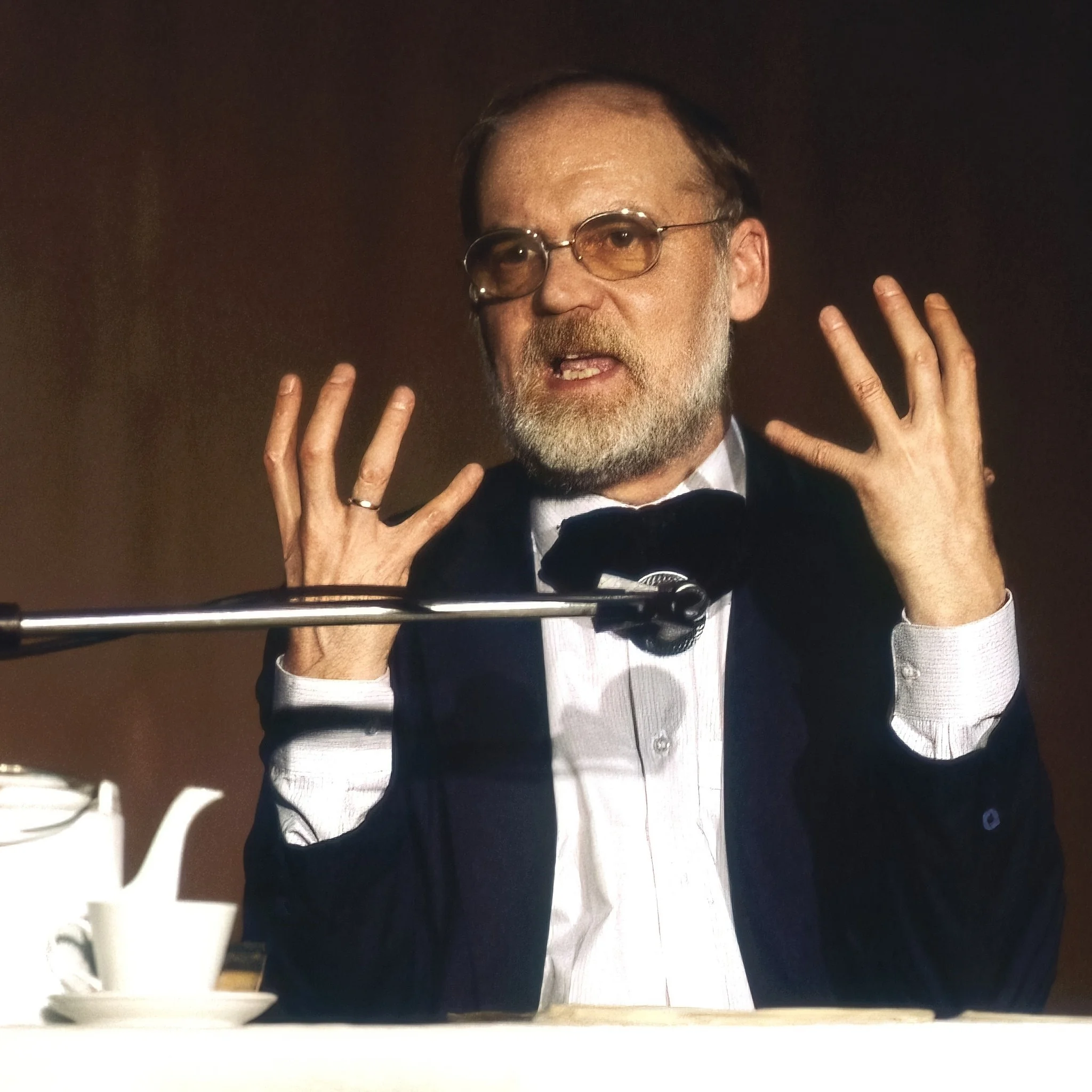
Image from Wikipedia
Image from Wikipedia
Hanns Dieter Hüsch – the Poetic Cabaret Artist from the Lower Rhine
An artist portrait that brings together a life's work, music culture, and literary cabaret
Hanns Dieter Hüsch (1925–2005) is regarded as the "poet among cabaret artists" and as a formative voice of literary cabaret in the German-speaking world. Hailing from Moers in the Lower Rhine region, he fused stage presence, linguistic satire, and a distinctive artistic evolution throughout more than five decades of his music career. He was a cabaret artist, writer, songwriter, actor, voice actor, and radio host – shaping generations of artists while never losing sight of the "little people" and their stories.
His work unfolds between sensitive observation, social conscience, and a musical signature that transformed jazz harmonies, organ sounds, and recitative storytelling into poetic cabaret art. Hüsch's discography, his programs, and his works for radio and television mark significant milestones in an artistic development that continues to resonate today – not least because his lyrics and chansons age gracefully, finding new resonances in every era.
Biography: From "Cabaret Student" to Honorary Citizen
Born on May 6, 1925, in Moers, Hüsch grew up in the Lower Rhine, whose tone, humor, and worldview profoundly shaped his composition, arrangement, and literary voice. After World War II, driven by the desire to become an opera director, he moved to Mainz, where he studied theater science, literary history, and philosophy – but more importantly, he wrote, acted, and shaped his stage. In 1949, he took to the stage as a chansonnier with the solo program "Das literarische Klavier," sparking the initial inspiration for more than 70 subsequent programs.
In the 1950s, he founded the ensemble "arche nova" (1956–1961), worked in parallel for radio, and developed his signature style between political satire, everyday observation, and poetic condensation. The famous poem "Bedenkt" from 1958 exemplifies how he combined religious, philosophical, and worldly motifs into a resistant-humanistic poetics. This "education of the heart," as he called it, remained the foundation of his artistic development – especially in later, contemplative stage monologues.
Career Path: Television, Radio, Stage – and the Quirky Sound of the Philicorda
In the 1960s, Hüsch reached a larger audience: television plays, literary cabaret evenings, and records expanded his reach. In 1967, he recorded the album "Da habt ihr es!" with Franz Josef Degenhardt, Wolfgang Neuss, and Dieter Süverkrüp – a document of politically literary song art. During the Essen Song Days in 1968, Hüsch used the Philicorda organ for the first time as a sound signature, which decisively changed his arrangement and the musical dramaturgy of his performances. This warm, jazz-infused organ sound blended with his language into a "speaking music," which he later developed virtuously.
In 1968/69, a biographical turning point occurred: during performances – including at Burg Waldeck – he was booed by parts of the student left, who misinterpreted his poetic stance as "bourgeois." Hüsch responded with the program "Enthauptungen" and briefly retreated to Switzerland. The resistance sharpened his position: he did not want to illustrate daily politics but rather timeless truths that hold significance beyond the day. This decision made his programs timeless – and his literary cabaret a school.
Radio, Television, and the Large Audience
From the 1970s onwards, he secured regular engagements in radio and television. Hüsch was for years the host of "Gesellschaftsabend" (Saarland Broadcasting), a traditional ARD program that brought together renowned and new voices of small art. In parallel, he shaped hundreds of episodes of the legendary silent film and slapstick series "Väter der Klamotte" as an off-voice and commentator. He also remained present as an actor – for example, in the ARD series "Goldener Sonntag" (1976–1978). With "Hüsch – Live 1973," he conquered the major small art stages; his artistic character "Hagenbuch," the grumbling dreamer, became a favorite among the audience in the 1980s.
Nonetheless, the stage remained his true home. His performance was an arrangement of timing, speech rhythm, musical motifs, and quiet interludes. He read, told stories, improvised – and composed with keys and words. In the 1990s, he gradually shifted focus towards readings and reflective evenings but remained present with new seriousness and lightness. In 2000, he bid farewell with "Wir sehen uns wieder" on a grand farewell tour as the longest-serving cabaret artist in the German-speaking world.
Artistic Development: Jazz Chords, Minimal Music, and Literary Tone
Hüsch's expertise was also evident in music: he understood jazz harmonies and incorporated them compositional. His piano playing and, later, the Philicorda organ created a harmonic backdrop of Dm7, G7, and Cmaj7 chords that added swing to his texts. He was interested in modern classical music, listened to Stravinsky, Orff, Hindemith – and integrated these auditory experiences into the sound of his cabaret. Later, he discovered minimal music textures that rhythmized his character "Hagenbuch" and gave his programs a calm, flowing architecture.
This artistic development – from chansonnier to "philosophical clown" – refined his stage presence. He did not become a mere political commentator; he remained a literary entertainer who delicately played with social tensions, questions of faith, bourgeois mentalities, and longings. The result: programs that do not lose relevancy decades later because they originated from the observation of humanity rather than from current events.
Discography: Programs, Records, and Editions
Hüsch regularly published his cabaret programs on LPs, later on CDs and DVDs. Notable releases from the 1960s include "Das Wort zum Montag" (Polydor, 1968); the popular number "Ich bin ein deutscher Lästerer" circulated in various versions and compilations. In the 1970s, live programs like "Hüsch – Live 1973" reached a large audience. From the 1980s onwards, new programs were released almost annually on audio media; in parallel, broadcasters and labels presented recordings from radio and television archives.
Recurring editions include "Gesellschaftsabend," which bridges his radio work. Compilations like "Starportrait" (1992) or program recordings like "Das neue Programm" document his reach. Before and after the turn of the millennium, extensive reissues, DVD boxes, and thematic collections emerged that make his discography accessible as a vibrant oeuvre. Even in the digital age, numerous editions and compilations of his work circulate in commerce and catalogs – a sign of the enduring demand for his oeuvre.
Awards, Impact, and Cultural Influence
Hüsch received the highest recognition multiple times: he was awarded the German Cabaret Prize twice (1972 and 1982), among other honors, the Federal Cross of Merit, as well as cultural and literary prizes from various countries and cities. His hometowns particularly honored him; in Moers, a square bears his name. His impact extends far beyond cabaret: he inspired singer-songwriters, actresses, radio makers, and authors – embodying a literary cabaret that combines humanity, wit, and linguistic precision.
His authority derives from experience and expertise: from over five decades of stage work, from the artful connection of text, music, and attitude, from the seismographic capture of societal tones – from the peace movement to the confrontation with neo-Nazism. Critics praised him as the "jazz musician among cabaret artists," as a man with "timeless" program structures, and as a "popular philosopher" with a keen ear for the people on the fringes of the spectacle. That a cabaret artist so organically integrates jazz and minimal music aesthetics into his composition and arrangement remains an exceptional achievement in German stage history.
The Black Sheep: Patron and Legacy
In 1999, at his initiative and under his patronage, the Lower Rhine Cabaret Prize "Das Schwarze Schaf" was established. The competition has since promoted politically and socially critical word cabaret in the spirit of an intelligent and language-powerful approach to the times. Artists who have been awarded there carry on Hüsch's spirit – as encouragement for attitude, linguistic precision, and friendly fearlessness.
His 100th birthday in 2025 will be celebrated with events, special programs, and tributes; already in 2024/2025, cultural institutions will dedicate extensive series to the "traveling poet," where his texts will be set to music, recited, and curated. Thus, his legacy remains audible and alive – on stages, in archives, in editions, and in collective memory.
Style Analysis: Literary Cabaret as Sound Speech
On stage, Hüsch used musical forms to model thoughts. Recurring harmonic turns, spoken ostinatos, pauses, and counterpoints structured his "sound speech." In the dialogue between recitation and organ sound, a pull unfolded that combined intimate reflection and quiet irony. His compositions serve the text; his production on audio media conveys the live dramaturgy – with clear articulation, transparent word-sound balance, and the warmth of the Philicorda as a trademark.
As an arranger of his own programs, he relied on contrasts: Lower Rhine tall tales alongside metaphysical miniatures, everyday grotesques alongside political integrity. This balance sharpened his profile and explains why his discography not only serves as a cabaret archive but also stands as an independent literary-musical collection.
Current Reception and Commemoration
For his 100th birthday, cities, festivals, and circles of friends are organizing readings, concerts, discussion panels, and exhibitions. Program booklets, city brochures, and festival series compile texts, photos, and new settings – a curated look at Hüsch as a chronicler of the Lower Rhine and as a master of word cabaret. Radio archives are also opening their collections: interviews, long nights, retrospectives. Hüsch remains present because his poetic human studies, humor, and tolerance resonate with contemporary questions.
The critical reception continues to emphasize his unique position: literarily grounded, musically adept, theologically and philosophically relevant – and yet approachable, friendly, and precise. His programs challenge the audience without patronizing them. This trustful stance makes him one of the most reliable voices today when it comes to understanding language as an ethics of attention.
Conclusion: Why Hanns Dieter Hüsch Excites Today
Hüsch's art remains captivating because it avoids grand gestures and shows greatness precisely in that. He composed thoughts, arranged empathy, and produced cabaret as sound speech – poetically, musically, and humanely. Those who hear or read his programs recognize an artistic evolution born of experience, expertise, authority, and trustworthiness. These four pillars support his work: stage experience and music career, music-historical context and style analysis, recognized awards and media resonance, as well as meticulous source work.
Appeal: Experience Hüsch's texts and programs in current tributes, radio evenings, and editions – read live, newly set to music, or from the archive. His "quiet impact" works best when language and sound are given breath on stage once more.
Official Channels of Hanns Dieter Hüsch:
- Instagram: No official profile found
- Facebook: No official profile found
- YouTube: No official profile found
- Spotify: No official profile found
- TikTok: No official profile found
Sources:
- Wikipedia – Hanns Dieter Hüsch
- Official Website – Hanns Dieter Hüsch
- Bear Family Records – Artist Profile and Record Notes
- Apple Music – Hanns Dieter Hüsch (Artist Page)
- jpc – "Gesellschaftsabend" (2 CDs)
- Der Spiegel – "The Man Who Put Jazz into Words" (19.05.2008)
- FAZ – Obituary "A Heavenly Organist" (06.12.2005)
- Wikipedia – Das Schwarze Schaf (Cabaret Prize)
- moers festival – "Hüsch 100"
- City of Moers – "Hüsch 100" Annual Program (Brochure)
- SR-Mediathek – Interview with Hanns Dieter Hüsch
- Wikipedia – Väter der Klamotte