
Giovanni Bononcini
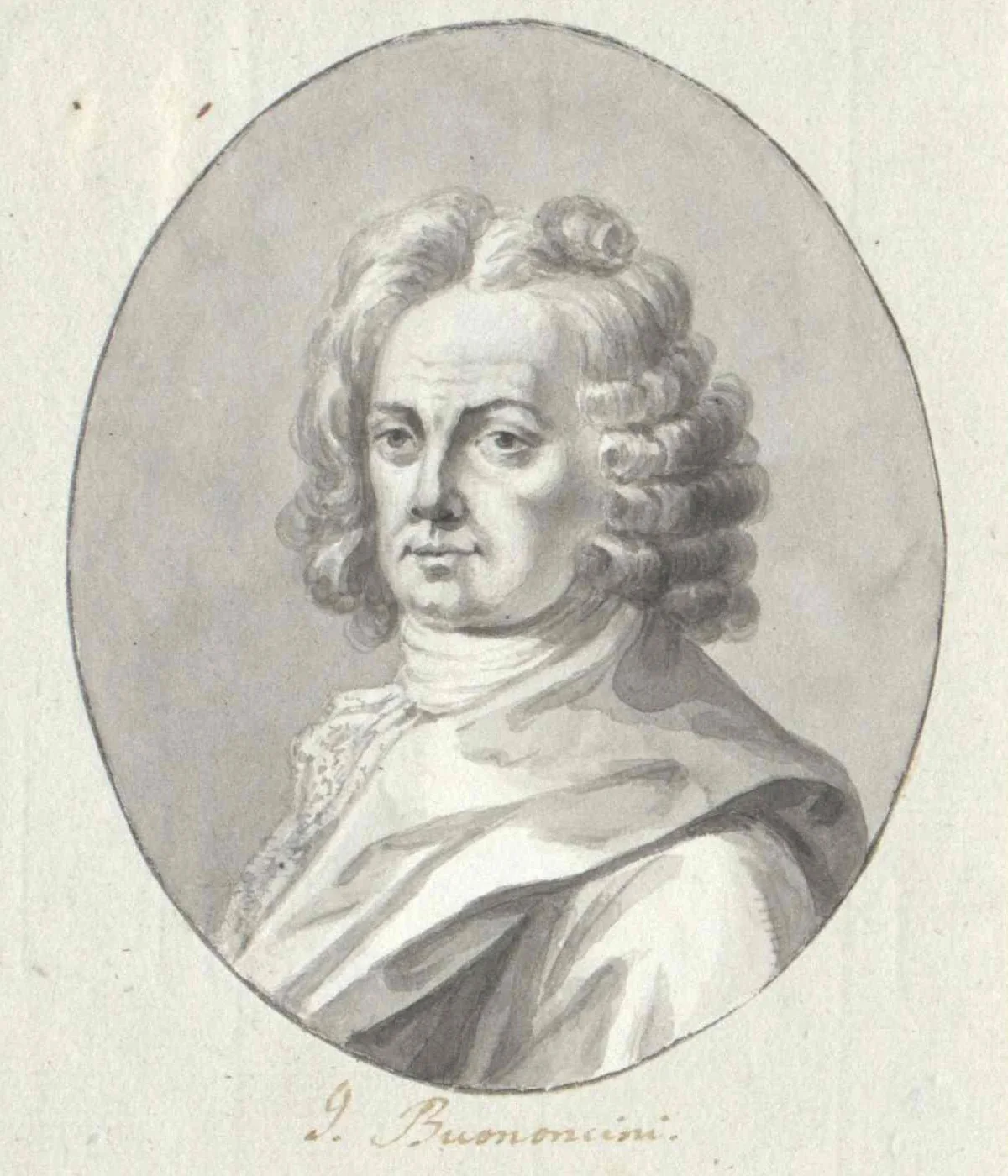
Image from Wikipedia
Image from Wikipedia
Giovanni Bononcini – Elegance of the Baroque Between Opera Fame and Rivalry
A Composer Who Conquered Europe's Stages
Giovanni Bononcini (July 18, 1670 – July 9, 1747) shaped early 18th-century European opera culture as an Italian composer and virtuoso cellist. Educated in Bologna and early on supported by esteemed patrons, he combined cantabile melodies with a refined dramaturgy that allowed singers to shine. His name stands for the grand Opera seria, for hundreds of cantatas, and for a musical career that took him from Modena to Rome and Vienna, ultimately to London – where he was the most famous rival of George Frideric Handel. Bononcini's artistic development showcases a distinctive sense of melodic simplicity, elegant harmonic progressions, and effective recitatives that significantly influenced Baroque music theatre.
Already as a teenager, Bononcini published collections of instrumental music and quickly established himself as a serious voice of his time. His stage presence as a cellist, collaboration with leading librettists, and productive activity at the imperial court in Vienna and the Royal Academy of Music in London made him a European brand. While the comparison with Alessandro Scarlatti and competition with Handel caused his reputation to appear fluctuating, his oeuvre experienced a revival in the 20th and 21st centuries at festivals, in editions, and on recordings.
Early Years in Modena and Education in Bologna
Born in Modena into a musical family, Bononcini received his first formative impulses from his father, Giovanni Maria Bononcini. He studied in Bologna under Giovanni Paolo Colonna and became an early member of the Accademia Filarmonica. These years laid the technical foundation for composition, counterpoint, and arrangement. Already in his teenage years, he published several opus collections, which combined the contemporary compositional techniques with melodic catchiness. The young composer presented himself as a virtuoso cellist, which later influenced his understanding of vocal lines and instrumental accompaniment.
His first oratorios, including works on biblical themes, demonstrated a sense for affect-related dramaturgy and a sure hand in the construction of four-part suites and ecclesiastical sound architectures. This phase shows Bononcini's artistic development from an academically trained composer to a stage composer who harmonizes emotion and form.
Rome: Stampiglia, Cantatas, and the Step into Music Theatre
In Rome, Bononcini began a long-standing and fruitful collaboration with the librettist Silvio Stampiglia. In a short time, numerous stage works and chamber cantatas were created that circulated within the city's aristocratic circles. Notably, the chamber cantata became a field of his mastery: In concentrated form, Bononcini molded melodic arcs, differentiated secco and accompagnato recitatives, and finely crafted arias. These works testify to stylistic economy and a compositional aesthetic that places the voice at the center – with clear diction, harmonic elegance, and subtle ornamentation.
With Il trionfo di Camilla, regina de’ Volsci, Bononcini created an early successful opera that solidified his reputation beyond Rome. His cantatas and serenades became creative laboratories in which he shaped themes, affects, and vocal profiles that he later transferred to the grand opera stage. Here, the specific combination of simplicity of line and sophistication of inner balance that characterizes his understanding of the genre is already evident.
Vienna as the "Natural Center": Court Composer and Style-Defining Import
By the end of the 1690s, Vienna became the center of his activities. At the imperial court, Bononcini established himself alongside composers like Johann Joseph Fux and Carlo Agostino Badia. He contributed to anchoring the late Baroque Italian opera style in the Habsburg metropolis – a style characterized by clear aria forms, affect-conscious recitatives, and careful voice distribution. His secular dramas, serenades, and operas for the court combined representative sound splendor with vocal virtuosity, establishing Bononcini as a reliable provider of imperial festivity music.
The Vienna years also document his versatility between instrumental music, sacred music, and stage works. Editions of his symphonies and sonatas demonstrate a confident handling of form and compositional technique; they convey the ideal blend of "simplicity and elegance" that contemporaries appreciated in his music. Bononcini's art serves both courtly representation and the affect-laden drama of the Opera seria.
Berlin Episode and European Reputation
Around 1702, Bononcini led a group of artists to Berlin. The local court culture was receptive to Italian opera aesthetics, and Bononcini's reputation as a celebrated stage composer was further solidified. Contemporary reports emphasize his charisma and his sovereignty as a singer and instrumentalist. This phase underscores the European dimension of his musical career: Bononcini operated on axes between Rome, Vienna, Berlin, and later London – as a composer who connected repertoires, performance practices, and vocal stars.
The repertoire of the early 1700s illustrates his sensitivity to role profiles, tonal characteristics, and text declamation. Bononcini's duets, where contrapuntal craftsmanship meets melodic sweetness, became exemplary models for vocal dialogues in chamber format.
London and the Royal Academy of Music: Rivalry with Handel
In 1720, Bononcini accepted an invitation to London at the newly founded Royal Academy of Music. Here, the famous rivalry with George Frideric Handel culminated, which possessed not only aesthetic but also socio-political dimensions. The public identified factions – "Bononcinists" and "Handelians" – and closely followed the competition. This comparison was programmatically manifested in the opera Muzio Scevola in 1721: Three composers shared the acts; Bononcini's elegant, "Italianate" idiom met Handel's theatrical weight. Contemporary judgments often rated Handel higher, yet Bononcini achieved considerable success and profoundly influenced the London operatic sound.
In London, he produced several operas, including Astarto, Crispo, and Griselda, and composed an anthem in 1722 for the death of the Duke of Marlborough. His stylistic signature – cantabile melodies, economical forms, singer-friendly tessituras – matched the taste of an audience that appreciated virtuosity and clarity. Nevertheless, confessional tensions and political alignments complicated his position, an issue already addressed by contemporary critics.
Scandal, Travel, and Later Years in Vienna
In 1731, a plagiarism accusation shook Bononcini's reputation: A madrigal he submitted as his own work turned out to be a piece by Antonio Lotti. The incident marked a turning point, after which Bononcini increasingly worked in Paris, Madrid, and Lisbon. He returned to Vienna in 1737; Empress Maria Theresa commissioned a Te Deum in 1741 and secured a pension for the composer. Bononcini died in 1747, nine days before his 77th birthday.
The late works reveal a matured musical language in which he connects the achievements of Opera seria with a more contemplative tone. Bononcini remained a master of the vocal line – his arias are often simple, even reminiscent of folk songs, while never losing the intricate foundation of harmony, counterpoint, and rhetorical gesture.
Catalogue of Works, Discography, and Performance Practice
Bononcini's discography reflects the breadth of his oeuvre: from chamber cantatas and Duetti da camera to oratorios and a long series of operas. Key works include Il trionfo di Camilla, Griselda, Astianatte, Astarto, Crispo, Farnace, Zenobia, as well as oratorios such as La Vittoria di Davidde contra Golia, San Nicola di Bari, and La conversione di Maddalena. In instrumental music, his symphonies and sonatas testify to the Bolognese school, whose texture mediates between concertante motoric and lyrical line.
Current editorial projects and new music editions – such as symphonic collections from the 1680s – promote a historically informed performance practice. Leading ensembles rely on Urtext editions, supporting clarity of voices, articulation sharpness, and stylistically appropriate tempos. Modern recordings of his cantatas and arias, often featuring star soloists, highlight Bononcini's instinct for vocal colors and affective rhetoric.
Style, Form, and Sound Language
Bononcini cultivates a melodic directness that reveals rare nobility in the Opera seria. His recitatives clearly structure the action and are dramatically sharpened in the accompagnato. The arias, often in da capo form, favor manageable periodicity and a singing line that organically integrates ornamentation. In duets, he experiments with contrapuntal interweaving without sacrificing vocal readability – a hallmark of his compositional signature.
Compared to Handel, Bononcini seems lighter, more fluid, and "more Italian" in his line direction, less dramatically dialectical, yet full of refined elegance. In Vienna, he combined these qualities with representative sound splendor; in London, he adapted his productions to vocal profiles and role types. The sound of his instrumental music remains clearly textured, with a distinct sense of upper-voice-driven harmony and rhythmic balance.
Cultural Influence and Reception
Music history discourse has long placed Bononcini in relation to Scarlatti and Handel. However, contemporary authors praised his ability to write for voices, his "ideal of simplicity and elegance," and the impact of his melancholic arias. In the 20th and 21st centuries, his work is gaining new attention: Festivals, opera houses, and chamber music series are rediscovering the dramatic economy, vocal brilliance, and stage effectiveness of his scores.
This rediscovery has practical reasons: Bononcini's scores are singer-friendly, dramaturgically lean, and aurally very attractive in historical performance practice. For ensembles that appreciate Baroque rhetoric and affect-driven interpretation, his repertoire offers rich material – from chamber music intimacy to great opera stages.
Current Projects, Editions, and Performances (2024–2026)
Today, Bononcini is prominently featured in programs and editions. A scholarly edition of his early symphonies provides reliable foundations for stylistically appropriate interpretations. Concert series and festivals are programming his symphonies, arias, and sacred works. Recent theatrical impulses include concertante and semi-staged formats that connect Bononcini's operatic aesthetics with contemporary dramaturgies.
Notably, recent program announcements list Griselda at a prestigious Vienna opera house for the 2025 season, chamber music Bononcini programs in the Netherlands and Spain, as well as festival formats that place Bononcini alongside Handel, Scarlatti, and Ariosti. Austrian concert cycles have also prominently included the composer's symphonies and arias in 2025. Concurrently, high-quality video and audio formats for cantata programs are being produced, exemplarily documenting Bononcini's vocal elegance.
Conclusion: Why Giovanni Bononcini Resonates Today
Giovanni Bononcini fascinates with the clarity of his melodic language, the precision of his dramatic craft, and the vocal empathy of his compositions. His operas and cantatas demonstrate how affect-conscious rhetoric and elegant formulation can lead to immediately touching music. In a music culture that values vocal virtuosity and dramatic coherence, Bononcini's work offers rich opportunities for lively, audience-oriented interpretations.
Anyone wanting to experience Baroque music with heart and mind should hear Bononcini live: in aria evenings, cantata programs, or staged opera performances. His music unfolds a quiet yet lasting magic in concert halls and on stage – a ringing proof that elegance and depth of expression are not opposites.
Official Channels of Giovanni Bononcini:
- Instagram: No official profile found
- Facebook: No official profile found
- YouTube: No official profile found
- Spotify: No official profile found
- TikTok: No official profile found
Sources:
- Wikipedia (EN) – Giovanni Bononcini
- Encyclopaedia Britannica – Giovanni Bononcini
- Operabase – Giovanni Bononcini, Composer
- OÖ. Stiftskonzerte – Program Press Release 2025 (Bononcini in the Program)
- Fondazione Arcadia – Bononcini Project
- WLSCM/SSCM – Edition: G. Bononcini, 12 Sinfonias (Op. 4 and 6)
- GFHandel.org – Chronology and Contexts of the Royal Academy (Muzio Scevola, Astianatte)