
Emily Brontë
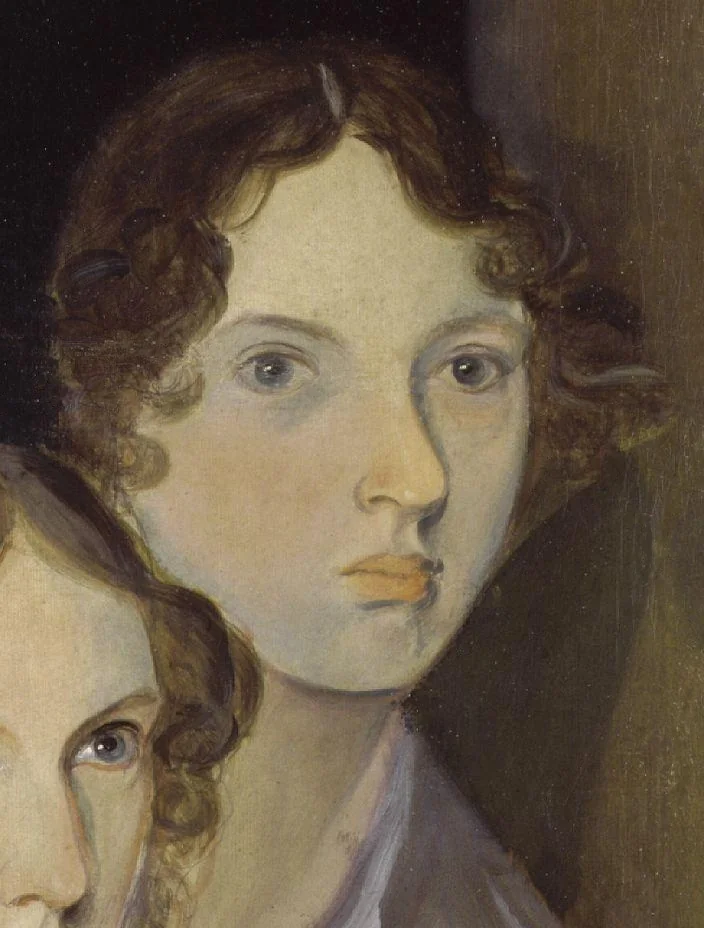
Image from Wikipedia
Image from Wikipedia
Emily Brontë
The Wild Voice of the Moors: Emily Brontë's Path to Becoming an Enduring Icon of World Literature
Emily Jane Brontë (1818–1848) shaped one of the most uncompromising novels of the 19th century with Wuthering Heights and is considered one of the most significant voices in English literature. Growing up in the parsonage of Haworth in West Yorkshire, she combined experience of nature, poetic vision, and radical character psychology into an artistic development of extraordinary density. Under the pseudonym Ellis Bell, she published poems and her only novel, which initially caused a stir and is now regarded as a masterpiece. Her stage presence did not exist in the theatrical sense but in the intensity of her texts: a literary aura that radiates into our present.
Early Years: Childhood in the Parsonage and the Birth of a Literary Imagination
Born on July 30, 1818, in Thornton, Emily Brontë moved with her family to Haworth in 1820, where the moor-covered landscape became the aesthetic signature of her work. The early loss of her mother and the isolation of the parsonage sharpened her perception of inner worlds, moods of nature, and moral conflicts. Together with her siblings Charlotte, Anne, and Branwell, she invented complex realms of fantasy and began composing and arranging in tiny booklets. These early writing games were not just childish antics, but a school of composition, storytelling, and poetic condensation.
Learning Years, Education, and Profession: Balancing Teaching and Retreating to Personal Art
Like many women of her time, Emily Brontë had to secure her livelihood at times as a teacher—an experience she felt interfered with her artistic development. In 1842, she accompanied her sister Charlotte to Brussels to deepen her linguistic and literary expertise; however, she found the foreign land alien and returned to Haworth soon after. The music career of a poet consists of hours of silence, working on texts, patiently producing a distinctive tone. This is exactly the tone Emily sought by disciplined retreat and refining poems that are rich in metaphors, rhythm, and a rare energy of sound.
Ellis Bell: Pseudonym, Poetry, and the Assertion of a Female Author
In 1846, Emily, together with Charlotte (Currer Bell) and Anne (Acton Bell), published the poetry collection Poems by Currer, Ellis and Acton Bell in a small edition. The volume sold poorly but laid the foundation for her authority as a poet and opened the path to her novel. The pseudonym “Ellis Bell” was more than a disguise: it was a strategic arrangement to avoid prejudice against female authors and focus the reception on literary quality. Her texts already showcase a sovereign hand in the arrangement of opposing voices, in the interplay of voice and perspective, and in the condensation of symbolic motifs.
Wuthering Heights: Composition of a Radical Novel
Wuthering Heights, published in 1847, marks Emily Brontë’s breakthrough as an original storyteller. The novel is formally bold: a nested narrative structure with the narrator figures Lockwood and Nelly Dean, flashbacks, documentary-like insertions, and a sophisticated play with unreliability. The composition does not follow the smooth arc of the Victorian social novel but rather a dramatic topology of affect, obsession, and memory. Heathcliff and Catherine Earnshaw do not appear as moral lessons but as existential forces reflecting love, hate, possessiveness, and transcendence in extreme condensation.
Initial Controversy, Later Canonization: Changing Critical Reception
The immediate reception of the novel was ambivalent to hostile: critics complained about roughness, immorality, and “unfemininity” of the style. With the passage of time, the evaluation shifted fundamentally: Wuthering Heights was recognized as a pioneering work of psychological probing, dark romanticism, and formal innovation. In literary history, the novel is now regarded as a milestone that composes a new, modern understanding of characters from the tradition of Gothic romance and the Byronic Hero. The specialized press, editions, and academic debates particularly commend the consistency with which Brontë intertwines natural space, social power relations, and metaphysical longing.
Themes and Style: Nature, Voice, Transcendence
Brontë’s artistic development culminates in a distinctive aesthetic. The moorland is not a decorative setting but a resonant field of soul states—a realm that “orchestrates” weather, wind, and expanse as guiding motifs of the narrative. Her poetry—such as the famous poem “No Coward Soul Is Mine”—achieves a spiritual tension that unfolds an inner music of faith beyond church dogma. In her prose, she works with sharp cuts, contrapuntal perspectives, and a precise arrangement of narrative voices: formally strict, emotionally uncompromising.
Family Network and Workshop: The Brontës as a Creative Community
The Brontë sisters form a unique literary formation, whose mutual critique, encouragement, and productive rivalry raised the level of all involved. Charlotte published Jane Eyre, Anne The Tenant of Wildfell Hall—three solo voices that matured in a shared creative climate. For Emily, this network meant a workshop where she tested genre boundaries, let poetic ideas go through rehearsals, and found a distinctive authorial trace. Her authority grew not through public appearances but through textual substance, formal care, and stylistic integrity.
End of Life and Legacy: A Short Life with Long Aftermath
Emily Brontë died on December 19, 1848, in Haworth at the age of just 30, probably from tuberculosis. Her slim oeuvre nonetheless unfolded a history of impact that is unparalleled: new editions, translations, adaptations, and a steadily growing body of research literature. The Brontë Parsonage Museum in Haworth preserves manuscripts, objects, and memorabilia of the family, making the creative atmosphere of the parsonage palpable. Thus, Brontë's voice remains present—a resonant tone in the canon of world literature.
Catalog of Works and Reception: Novel, Poems, and Editorial Practice
Emily's work focuses on one novel and a substantial lyrical corpus. The poems were published anonymously in 1846 under the Bell pseudonyms; later editions established authorship and variants. Wuthering Heights was edited and republished after Emily's death; with each critical edition, the understanding of narrative structure, motifs, and symbolism sharpened. Numerous studies analyze genre, composition, and character portrayal—from narrative technique to questions of class, gender, and coloniality in 19th-century England.
Cultural Influence: Stage, Film, Pop Culture
Wuthering Heights has inspired theatre, opera, film, television, and pop music for over a century. The character Heathcliff became the archetype of passionate, destructive masculinity, while Catherine represents a counterfigure between the desire for freedom and social bondage. In recent times, new film adaptations and curated exhibitions refer to the unbroken appeal of the material. Even in pop culture, Brontë's imagery and atmosphere continue to act as an aesthetic score—a testament to the modernity of her narrative composition.
Contemporary Echo: Adaptations and New Releases in the 21st Century
Current editions, new translations, and film projects keep the work in cultural discourse. In the latter half of the 2020s, a new film adaptation of Wuthering Heights has come into focus, for which pop artist Charli XCX announced new music for the soundtrack. Reports about this project emphasize the conscious departure from the club sound of earlier releases and the atmospheric approach to Brontë’s world of the novel. Whether in cinema, in museums, or in scholarly editions: reception remains dynamic and international, supported by publishers, museums, and specialized press.
Style Analysis: Form, Voice, Arrangement
Emily Brontë employs a polyphonic narrative architecture that utilizes perspective as a compositional tool. The interplay between Lockwood's distanced observation and Nelly Dean's village experiential knowledge creates friction, ambivalence, and productive uncertainty. Metaphor and imagery of nature give the text a dense timbre; sentence rhythm and repetition function like thematic motifs of a score. Thus, a kind of symphonic storytelling emerges from prose—strictly constructed, dark-toned, and eruptively emotional.
Positioning in Literary History: From Gothic Romance to Modernity
Brontë's novel stands in a lineage with Gothic novels and romantic poetry, but it further advances towards psychological modernity. The Byronic Hero is no longer idealized but dismantled and presented as a contradictory, wounded figure. This shift—from moral example to ambiguous character study—made Wuthering Heights a reference work for later authors. The connection of nature, social order, and metaphysical longing is not merely a backdrop but the substantive rhythmic driver of the narrative.
Conclusion: Why Emily Brontë Must Be Read Today
Emily Brontë fascinates because her literature knows no compromises: she composes a world where feelings are not muted, but resonate at full volume. Her artistic development, from early poems to the singular novel, demonstrates maximum concentration on form and effect. Those who read Wuthering Heights experience prose like a dramatic score—with crescendos, pauses, and fanfares of wind and weather. Recommendation: Rediscover the novel in a well-commented edition and, if possible, visit the Brontë Parsonage Museum—there you can feel why this voice still sounds unmistakable today.
Official Channels of Emily Brontë:
- Instagram: No official profile found
- Facebook: No official profile found
- YouTube: No official profile found
- Spotify: No official profile found
- TikTok: No official profile found
Sources:
- Encyclopaedia Britannica – Emily Brontë (Biography, Works, Reception)
- Penguin Random House – Emily Brontë (Author Page, Editions)
- Brontë Parsonage Museum – About Us (House Museum and Collection)
- The British Library – Emily Brontë (Author Profile, Context)
- Wikipedia (de) – Emily Brontë (Data, Pseudonym, Overview of Works)
- Wikipedia (de) – Wuthering Heights – Sturmhöhe (Film Project, Soundtrack Context)
- idowa Freistunde – Outlook 2026: Charli XCX Soundtrack for Wuthering Heights
- ORF FM4 – New Music for the New Year: Notes on Charli XCX/Wuthering Heights
- Wikipedia: Image and text source
Upcoming Events
"Wuthering Heights" - Wuthering Heights
"Wuthering Heights" - Storm Heights
Wuthering Heights – Schauspielhaus Bochum
"Wuthering Heights" - Wuthering Heights
Wuthering Heights - Storm Height