
Elke Heidenreich
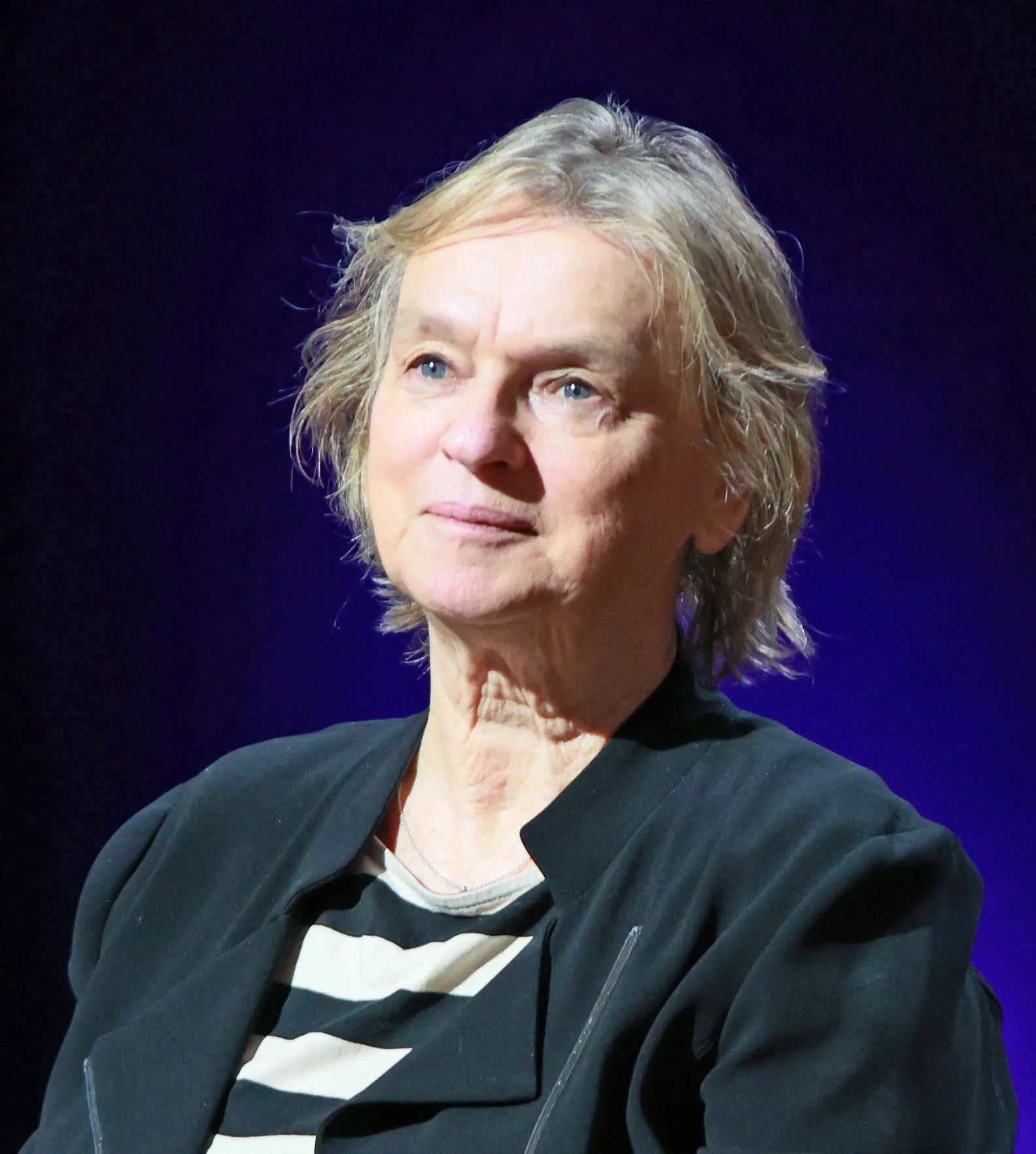
Image from Wikipedia
Image from Wikipedia
Elke Heidenreich – Voice of Literature, Heart of the Opera: A Portrait Page for Music and Culture Fans
Between Bookshelves and Orchestra Pits: Why Elke Heidenreich Influences Generations of Readers and Opera Lovers
Elke Helene Heidenreich, born on February 15, 1943, in Korbach, has been pursuing an extraordinary career in music in a broader sense for decades: as a literature expert with a strong stage presence, as an audiobook narrator with a distinctive voice, and as an opera librettist who shapes stories for music. Her journey from radio hosting through cabaret and television to successful books demonstrates an artistic development that consistently connects literature, language, and music. Those who experience her presentations, readings, or libretti quickly recognize: Here speaks an author who understands sound, text, and dramaturgy as an organic unity – and skillfully conveys this experience to her audience.
Heidenreich became known through her work in television and radio, famous for books like “Kolonien der Liebe” and “Nero Corleone,” and culturally influential through the ZDF literature program “Lesen!”. In parallel, she cultivated a deep passion for opera – not only as a mediator but as a creative co-designer. Her artistic signature always seeks clarity, emotionality, and narrative precision: qualities that shine through in her prose as well as in libretti, essays on composition and interpretation, or in documentary formats about Verdi and the world of opera.
Biographical Lines: From Else Stratmann to Opera Librettist
Heidenreich began her media career in the 1970s in radio, soon followed by television, columns, and her own stage programs. An early trademark was her comedy character Else Stratmann – a satirical creation that sharpened her observational skills, linguistic wit, and timing. This stage presence and sense of timing later shaped her literary criticism, oscillating between bold judgment and heartfelt mediation. Her breakthrough as a writer came in 1992; since then, she has published short stories, column collections, and essays, often with a fine sensitivity for nuances, shifts in rhythm, and pauses known from music.
The artistic development naturally led her to opera. Heidenreich understands the genre as a total art form in which music carries the great emotions and the libretto sets the dramatic pulse. As a librettist, she works with clear situations, singable syllables, and a dramaturgical structure that brings arias, duets, and ensembles to life both scenically and musically. Her experiences as a moderator, author, and speaker flow into a text work that is always intended for singers – and for an audience that wishes to be touched.
Career Highlights: TV Formats, Reading Stages, and Literary Mediation
With “Lesen!”, Heidenreich shaped one of the most influential literature programs in German-speaking television between 2003 and 2008. Later, she continued her curatorial role in new formats and regularly recommended new releases to a wide audience. This work of literary mediation – selection, context, categorization – parallels music dramaturgy: recognizing motifs, developing themes, constructing arcs of tension. Her voice as an audiobook narrator additionally anchored a kind of “oral literature culture,” which brings together text and sound and takes the ear seriously as an aesthetic resonance space.
Even live, Heidenreich remains a confident storyteller. Whether in conversation series, literary revue formats, or moderated evenings with orchestras: she connects narrative art, music history context, and personal experience into a complete picture that appeals to both experts and newcomers. Her music criticism never comes across as academically detached but rather concrete, passionate, and close to the practice of composition, arrangement, and interpretation.
Opera Work: Libretto, Dramaturgy, and the Stage as a Resonance Space
As an opera librettist, Heidenreich came to the forefront in 2015 with “Adriana” – a music theater work by composer Marc-Aurel Floros, premiered at the Kammeroper Schloss Rheinsberg. Press and radio described the piece as an emotionally charged contemporary drama, whose textual structure deliberately allows for the “typical emotional outbursts” and grand ensemble moments of opera. Critics emphasized the narrative access that makes characters psychologically tangible without overburdening the singing line: a libretto that lets the music breathe, allowing it to unfold its full dramatic effect.
Beyond this individual work, Heidenreich has been setting impulses as an opera mediator for years. She has written columns on opera topics, curated music-related editions, and created TV segments where she explains composers' biographies, score gestures, and performance practices in an accessible way. Her strength lies in sound-close storytelling: music history becomes a living present when she speaks about tone colors, orchestral textures, and scenic economies. Thus, a bridge is created between the audience and the stage – a form of music pedagogy at a professional level.
Current Projects 2024–2026: Revue, Orpheus-Themed Evening, and Literary Presence
Among her recent music and stage projects are moderated concert and revue evenings in which Heidenreich engages with musicians on major themes from music history. One example was a 2024 Orpheus evening with the WDR Funkhausorchester, illuminating the myth between operatic recitative, song, and modern orchestral color. For 2025, the Oper Köln announced a revue on Joseph Haydn, where Heidenreich, along with Alain Claude Sulzer, will discuss the master of the classics, making his music experienceable in chamber music setups. Such programs showcase her profile as a storyteller between literature and sound – an artistic form that elegantly intertwines information, anecdote, and musical analysis.
Simultaneously, Heidenreich remains present in the literary world – as an author, speaker, and columnist. In conversations and appearances, she reflects on aging, reading, and the role of art in everyday life. Her readings and media contributions combine personal experience with cultural-historical context, appealing to a broad audience. The spectrum ranges from book recommendations to deep dives into the world of opera – always with a clear stance, concise language, and an infallible sense of dramaturgy.
Discography, Audiobook Work, and Sound Aesthetics
Although Heidenreich is not a singer in the narrow sense, she has an impressive “discography” as a speaker and curator of audio formats. Her audiobook works – from her own texts to literary classics – demonstrate a vocal technique that expertly controls syllable flow, tempo, and breath management. This makes her readings musical events, where the rhythm of the prose and the intonation of the voice work compositionally. Additionally, she has published music-related works and audio formats that explain opera and classical music in an audience-friendly manner – a catalog that underlines her authority as a cultural mediator.
Music distribution platforms also feature her speaking and reading works. A sound profile can be discerned from this: articulated, pointed, warm in timbre, always focused on understandability and fidelity to the text. In total, this results in a tonal art of storytelling that works in both the radio studio and the concert hall – a rare synthesis of literary voice and musical form.
Style, Genre Understanding, and Artistic Development
Heidenreich’s literary style is straightforward, rhythmic, often dialogic. Musically speaking, her prose works with motivic condensation and clear periods reminiscent of chamber music writing techniques. As a librettist, she prefers dramatically pointed situations and singable, metrically robust language. Her essays on opera and composers connect historical contexts with anecdotal evidence and aesthetic argumentation – a mixture that guides newcomers while taking experts seriously.
In her artistic development, a steady expansion of sound space can be observed: from cabaret to spoken word to the music stage, from book to studio, and from studio to stage. This polyvalence makes her work accessible to different audience groups – and creates a foundation of trust based on competence, experience, and approachable mediation.
Cultural Influence and Reception
As a literary mediator, Heidenreich has shaped reading habits and promoted authors' careers. As an opera publicist and librettist, she has simultaneously directed the perception of the genre toward a more life-affirming direction: away from the mythical ivory tower and towards existential contemporary art. Reviews highlighted the emotional directness and clear text structure of “Adriana”; organizers rely on her ability to narrate musical dramaturgy “live” during moderated evenings. This authority derives from a breadth of expertise – literature, music, stage – and from the trustworthiness of a voice that has consistently delivered its promises for decades: orientation, enthusiasm, quality.
Classification: Opera Between Text and Music
Heidenreich’s work exemplifies how a well-crafted libretto fuels composed drama: it places vowels, consonants, and word accents so that the flow of lines and breath economy align; it structurally builds emotional shifts, retardations, and culminations in a plausible manner; it allows space for orchestral colors, interludes, and transitions. Her understanding of opera as “narrative music” leads to libretti that musicalize scenes without diminishing characters. In her mediation, she translates score and rehearsal practices into vivid imagery: the “breathing” of an orchestra, the register changes of a voice, the interplay of texture and tempo – expertise that sharpens listening.
Conclusion: Why You Should Read – and Experience Live – Elke Heidenreich
Elke Heidenreich embodies the rare alliance of literary author, critical mediator, and music-dramatic text creator. Her books breathe rhythm, her audiobooks are vocal compositions, and her work in opera connects dramatic economy with emotional breadth. Those who love opera or want to learn to love it will find in her a credible guide through scores, stages, and history. And those who love literature will discover in her a storyteller with a sharp eye, comedic timing, and great understanding of people. In short: Heidenreich’s art sparks curiosity about music – and music’s curiosity about literature. The best place to experience this is in the live moment: a reading, a moderated evening, a revue or opera project. There, where words, sounds, and listeners breathe in one space, her art unfolds most strongly.
Official Channels of Elke Heidenreich:
- Instagram: No official profile found
- Facebook: No official profile found
- YouTube: No official profile found
- Spotify: No official profile found
- TikTok: No official profile found
Sources:
- Wikipedia – Elke Heidenreich
- Penguin Random House – Author Profile Elke Heidenreich
- Ullstein – Author Page Elke Heidenreich
- Deutschlandfunk – Premiere of “Adriana” (2015)
- Der Tagesspiegel – “Adriana” in Rheinsberg (2015)
- WELT – Report on “Adriana” (2015)
- WDR Funkhausorchester – Orpheus Evening with Elke Heidenreich (2024)
- Oper Köln – “HAYDN!” Revue with Sulzer and Heidenreich (Announcement 2025)
- Der SPIEGEL – “More Reading with Elke Heidenreich”
- Carus-Verlag – Profile Elke Heidenreich (Music Edition)
- Der Audio Verlag – Audiobook Narrator Elke Heidenreich
- SWR1 – Conversation with Elke Heidenreich (2024)
- Wikipedia: Image and text source
Upcoming Events
Reading Night at DAKS: Nero Corleone – A Cat Story