
Christoph Hagel
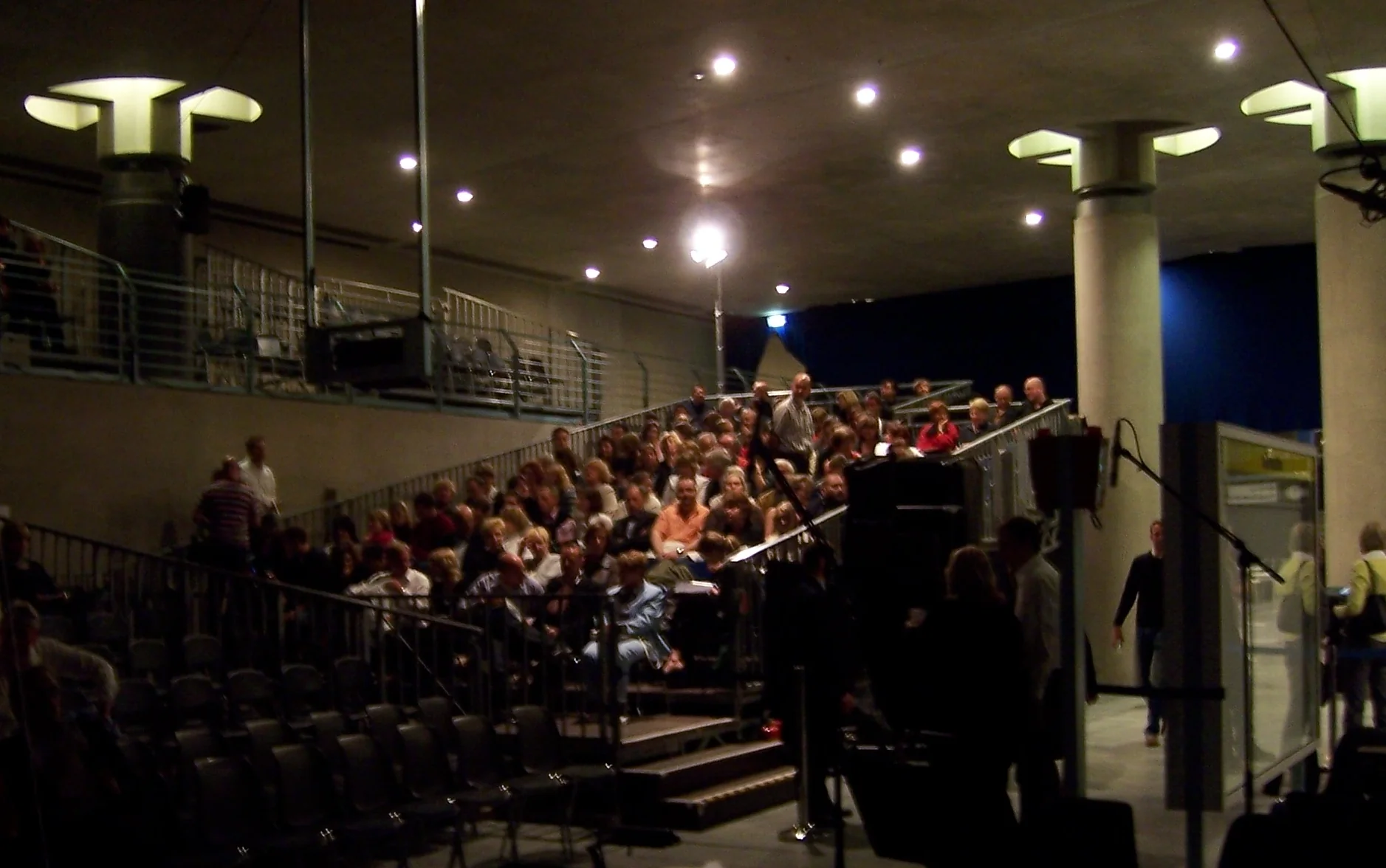
Image from Wikipedia
Image from Wikipedia
Christoph Hagel – Conductor, Opera Director and Crossover Pioneer
Between Bode Museum and Breakdance: The Stage as a Laboratory for Classical Music, Dance and Urban Culture
Christoph Hagel (*1959 in Biberach an der Riß) is one of the defining German musical personalities who reimagines classical music and makes it accessible to a wide audience. As a conductor, pianist, and opera director, he merges classical masterpieces with urban dance, rap-influenced forms of expression, and spectacular venues. His musical career took him from studies in Vienna, Munich, and Berlin to masterclasses with Leonard Bernstein and Sergiu Celibidache, and further to chief positions in Latin America. His artistic development is characterized by unconventional formats, precise musical work, and a charismatic stage presence.
Hagel gained wide recognition with extraordinary opera productions at the Berlin Bode Museum, with Mozart in the subway station, or with crossover formats that bring breakdance ensembles together with the music of Bach, Beethoven, and Orff. This signature style – dramaturgically focused, musically grounded, visually striking – has made him internationally sought after and led to numerous tours and awards.
Biography: Education, Influential Stages and International Experience
Hagel grew up in Baden-Württemberg and studied conducting and piano among others in Vienna, Munich, and Berlin. Early on, he sought exchange with significant musical personalities and deepened his understanding of composition, arrangement, and orchestral sound in masterclasses with Leonard Bernstein and Sergiu Celibidache. These teachers shaped his sensitivity to phrasing, timing, and orchestral transparency – qualities that permeate both his later productions and his performances as a conductor.
His early career was defined by curiosity and a love for travel: engagements took him multiple times to Latin America, where he conducted orchestras in Argentina, Colombia, Mexico, and Peru and served as principal conductor of the Symphony Orchestra and director of the Conservatory of Ibagué from 1999 to 2001. These experiences broadened his musical horizons with sound colors, audience connection, and organizational skills – invaluable for the later dual role as director and musical leader.
Breakthrough in Berlin: The City as a Stage and Resonance Space
In Berlin, Hagel consistently developed his understanding of crossover. In 1997, “Don Giovanni” at the techno club E-Werk made waves; in 2008, he staged “The Magic Flute” in the yet-to-open Bundestag subway station – a production that impressively combined urban architecture, sound aesthetics, and opera mythology. The Bode Museum on Museum Island became a central venue for his work: Here, among others, “Apollo and Hyacinth” (2006), “Orpheus and Eurydice” (2010), and “The Marriage of Figaro” (2012) were created. These productions fused space dramaturgy and historical aura with modern, clearly structured musical interpretation.
Alongside this, Hagel developed staged and choreographically influenced concert formats at the Berlin Cathedral with works such as Bach's “St. John Passion” or Haydn's “Creation.” His directorial approach always seeks the balance between fidelity to the works, precise text treatment, and contemporary imagery – a tension field that makes his artistic development visible and underscores his stage presence as an impulse-driven music theater creator.
Flying Bach and the Art of Crossover: When Well-Tempered Clavier Meets Breaking
With the project “Flying Bach” (from 2010), in collaboration with the Flying Steps, Hagel opened doors for a new form of classical music transmission: Bach's Well-Tempered Clavier became the choreographic engine for breaking, popping, and urban dance forms – precisely edited, musically finely tuned, with a dramatic arc. “Flying Bach” was awarded the ECHO Klassik Special Prize in 2010, toured across Germany and the world, and reached hundreds of thousands of viewers. This production marks a milestone as it intertwines musical analysis and physical virtuosity, literally putting the canon in motion.
Other crossover formats such as “Breakin’ Mozart,” “Beethoven! The Next Level” or “Dancin’ Carmina” continue this line: works by Mozart, Beethoven, and Orff are translated into a contemporary language of movement without shortening the music. Hagel's expertise in harmony, counterpoint, and orchestration is evident here in the precise setting of tempos, finely tuned arrangements, and in the sound dramaturgy between orchestra, choir, and electronically amplified elements.
Musical Signature: Style, Genre Understanding and Production
As a conductor, Hagel combines a clearly accented, rhythmically pointed reading of the score with a sonorous coloration. His tempos are gripping, his articulation is singer-friendly, and his approach to composition and arrangement is always dramaturgically motivated. He works interdisciplinary with dancers, acrobats, rap artists, and actors – the score thus becomes a scenic impulse generator rather than just a sound carpet. This understanding also shapes his rehearsal work: musical precision, physical energy, and scenic economy.
Cross-genre, the historical context remains present: In Mozart, Hagel often emphasizes buffonesque wit and chamber music transparency; in Bach, structural clarity and affective logic; in Orff, the percussive force. Sound direction and spatial acoustics – for instance, in the Bode Museum or Cathedral – are for him part of the composition: the arrangement responds to reverberation and perspective, and the production seeks sightlines in which music and movement form a coherent whole.
Repertoire Highlights and Scenic Hallmarks
Significant projects by Hagel include scenic Bach formats (“St. John Passion”), Mozart operas in unusual locations (“The Magic Flute” in the Bundestag subway station; “The Marriage of Figaro” in the Bode Museum), as well as “Flying Bach” as a global crossover flagship. In “Breakin’ Mozart” and “Beethoven! The Next Level,” his idea of intertwining classical form and urban movement culminates – supported by precise musical direction and an imagery that presents classics as contemporary experiences. These productions have shaped the cultural landscape of Berlin and have found broad resonance in the international press and professional circles.
Hagel does not shy away from making clear aesthetic decisions: strong lighting direction, clear spatial axes, rigorous cuts, pinpoint transitions. This results in evenings that feel musically cohesive while communicating closely with the audience – a hallmark of his theater that connects artistic development and transmission.
Current Activities 2024–2026: Projects, Tours, Presence
In recent years, Hagel has remained present with his crossover productions – “Flying Bach” continued its international tour, and the format was incorporated into festival and concert programs. In addition, the connection between classical music and urban dance has been a recurring theme in program booklets and festival announcements; his signature as artistic director and pianist is still in demand when it comes to innovative classical formats for new audiences. In Switzerland, for instance, the Bach repertoire with urban movement profiles was featured at relevant festivals, and in Germany, his signature productions regularly appear in house and tour plans.
Simultaneously, Hagel maintains collaborations with Berlin ensembles and orchestras, particularly the Berliner Symphoniker, with whom many of his scenic projects have been realized. This continues the line that has shaped him since the late 1990s: hearing repertoire anew, reading spaces anew, reaching new target audiences.
Discography, Media Presence and Reception
As a conductor and pianist, Hagel is present on popular platforms with recordings and production documentation; his name is associated with scenic grand projects and their media utilization – from TV contributions to concert documentaries. Particularly “Flying Bach” has been filmically accompanied, shown internationally at festivals, and evaluated in various formats. Music press and cultural commentary regularly acknowledge his consistent, labor-intensive connection of precise score work and audience-effective dramaturgy, while concert magazines and daily press emphasize the special acoustic and visual impact of his museum and cathedral projects.
Chart positions in a pop sense are less central for Hagel than the resonance, reach, and sustainability of his stage works: sold-out performances, international guest appearances, awards, program and festival presence. Critical reception particularly appreciates the accuracy of the musical preparation, the craftsmanship of the arrangements, and the integrative power between classical repertoire and urban forms of expression.
Cultural Influence: Classical Music Transmission, Diversity of Audiences, and Educational Aspects
Hagel’s work exemplifies an expanded understanding of classical music transmission: Not only concert halls and opera stages, but also museums, subway stations, or arenas become resonance spaces for Bach, Mozart, and Orff. This opens up new audiences and enables first encounters with canonical works in a surprising, relatable context. This principle promotes cultural participation, breaks down barriers, and creates 'aha' moments that foster long-term attachment to the classical repertoire.
His work shows how choreographic energy and musical structure can invigorate each other. For educational institutions, festivals, and orchestras, it provides blueprints for how artistic development and transmission can interact: workshops, discussions, open rehearsals, and media accompaniment make the production logic comprehensible and increase connectivity. Thus, Hagel’s approach stands in the tension field of tradition and innovation – and is culturally relevant beyond individual productions.
Voices of the Fans
The reactions from fans make it clear: Christoph Hagel inspires people worldwide. On Facebook, a visitor raves: “This is how I experience Bach for the first time – powerful, dance-like, precise!” A listener writes: “Opera in the subway? I was skeptical – now I’m a fan.” And another comment sums it up: “Crossover with substance: great music, big heart.”
Conclusion: Why Christoph Hagel is Indispensable Today
Christoph Hagel makes classical music physically tangible. His productions combine musical depth with visual strength, his direction gives works profile without trivializing them. Anyone who wants to know how classical music today reaches people from different scenes and generations will find a convincing answer in his works. He transforms spaces, broadens listening habits, and shows that artistic development always also means cultural opening. Recommendation: Experience his formats live – the mix of musical precision, energetic movement, and clever dramaturgy unfolds most strongly on stage.
Official Channels of Christoph Hagel:
- Instagram: No official profile found
- Facebook: https://www.facebook.com/pages/Christoph-Hagel/117500608366595/
- YouTube: No official profile found
- Spotify: No official profile found
- TikTok: No official profile found
Sources:
- Christoph Hagel – Official Website (Projects)
- Berliner Symphoniker – Artist Profile Christoph Hagel
- Wikipedia – Christoph Hagel
- Flying Steps Entertainment – Flying Bach (ECHO Klassik Special Prize 2010)
- Berliner Morgenpost – Christoph Hagel Directs “The Figaro” (20.01.2012)
- Tagesspiegel – “The Marriage of Figaro” at Bode Museum (18.03.2012)
- B.Z. – “The Magic Flute” in the Subway (22.04.2008)
- Neue Musikzeitung – “The Marriage of Figaro” at Bode Museum (17.03.2012)
- concerti – Mozart in Neo-Baroque Space (March 2012)
- Facebook – Official Page Christoph Hagel
- Wikipedia: Image and text source