
Alexander von Zemlinsky
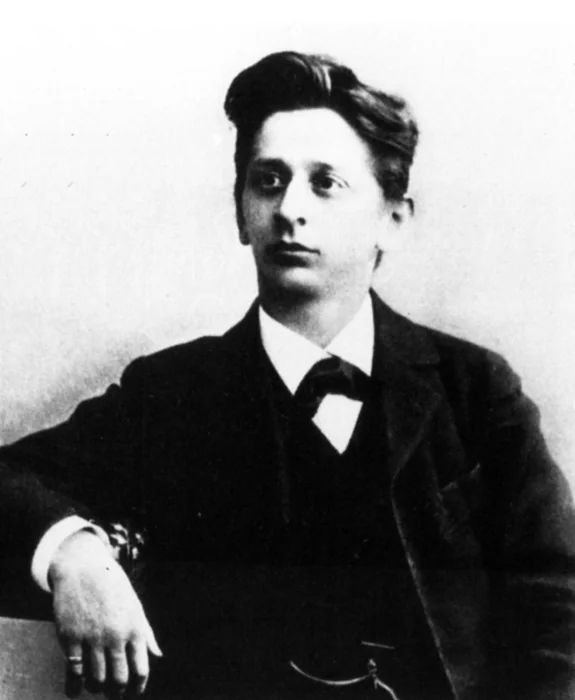
Image from Wikipedia
Image from Wikipedia
Alexander von Zemlinsky – Composer between Romanticism and Modernity
Between Brahms and Schönberg: The Rediscovered Voice of the Viennese Modernism
Alexander (von) Zemlinsky, born on October 14, 1871, in Vienna and died on March 15, 1942, in Larchmont, New York, is regarded today as one of the most fascinating artistic personalities at the intersection of late Romanticism and musical modernity. As a composer, conductor, and educator, he shaped the musical culture of Central Europe, without experiencing a lasting breakthrough during his lifetime. His works, from the Lyrical Symphony to the psychologically intricate operas, combine finely crafted orchestration with expressive harmony and a vocal line that unites literal declamation with symphonic breadth. Recently, an international renaissance has brought his oeuvre back to the attention of orchestras, opera houses, and music lovers – in 2026, the 150th anniversary of his birth will once again see his name exemplifying artistic development, stage presence, and the cultural awakening of his era.
Early Years in Vienna: Education, Mentors, and First Successes
Growing up in the multicultural Vienna of the late 19th century, Zemlinsky received his education at the Vienna Conservatory, where he studied piano, theory, and composition. The recognition he received from Johannes Brahms proved crucial, as Brahms repeatedly advocated for the young composer, facilitating his entry into professional music life. During this phase, chamber works and early symphonic pieces emerged, blending the tradition of high Romanticism with an acute awareness of harmonic expansions. Here, a handwriting emerges that connects lyrical melody with structural clarity and careful counterpoint – a foundation for his later compositional development.
The Conductor as Sound Creator: Volksoper Wien, Prague, and Berlin
In 1906, Zemlinsky took on the position of First Kapellmeister at the newly founded Vienna Volksoper; soon after, he worked at the Court Opera. However, it was his engagement at the German National Theatre in Prague (1911–1927) that proved formative, where he cultivated a nuanced sound ideal as a conductor, championed premieres, and advocated for new music. In Berlin, he later worked at the Kroll Opera within the milieu of Otto Klemperer, establishing himself as a musical organizer and educator who not only interpreted scores but also refined them in a quasi "composing" manner during rehearsals. This musical career as a conductor directly influenced his composition: orchestration, voice leading, and dramatic staging flow seamlessly in his works.
The Opera as a Psychological Chamber Play: Wilde One-Act Plays and Der Traumgörge
His operas exhibit a clear affinity for literary modernity. Particularly, Eine florentinische Tragödie (1915/16) and Der Zwerg (1919–21) based on Oscar Wilde combine precise character depiction with an orchestral fabric that acoustically illuminates inner conflicts. The vocal composition emphasizes prosody, clarity of words, and at the same time, sensual cantability. Earlier and later stage works, such as Es war einmal… or Der Traumgörge, document his ongoing search for new narrative forms between fairy tale and soul drama. The reception history has been variable: political upheavals, aesthetic avant-gardes, and changes in the opera industry hindered continuous repertoire success during his lifetime, yet the quality of his work remained indisputable.
The Symphony of Voice: The Lyrical Symphony as Legacy
With the Lyrical Symphony op. 18 (1922/23), Zemlinsky created perhaps his best-known work: a seven-movement vocal panorama for soprano, baritone, and large orchestra set to poems by Rabindranath Tagore in German translation. The score combines song-like intimacy with symphonic expansiveness and develops a colorful sound language that intertwines motif elaboration and large form dramaturgy. The Lyrical Symphony engages in a dialogue with Gustav Mahler's Das Lied von der Erde and, in turn, influenced Alban Berg's Lyrical Suite. This interconnection within Viennese modernism underscores Zemlinsky's central position as a stylistically influential yet long-underestimated composer.
Between Tradition and Breakthrough: Style, Harmony, and Instrumentation
Zemlinsky's musical language transcends Romantic harmony without completely breaking the boundaries of tonality. Chromatic density, expanded chords, and sophisticated intermediates create a shimmering ambivalence that manifests particularly in his orchestral works – from Die Seejungfrau to the Sinfonietta. In both composition and arrangement, he preferred differentiated woodwind colors, warmly timbred brass, and a string line that carries the breath of song. This production in an orchestral sense – a planned, acoustically sensitive shaping – creates spaces where voice and orchestra comment on and contrapuntally engage with each other. The result is an unmistakable "Zemlinsky sound": transparent, lyrical, yet dramatically intensified in crucial moments.
Mentor, Networker, Pioneer: Relationships with Mahler and Schönberg
Biographically as well as aesthetically, Zemlinsky occupied a pivotal position in music history. He was supported by Gustav Mahler, advocated for Arnold Schönberg, and conducted key works of the Second Viennese School. This position between tradition and avant-garde shaped his artistic development: he absorbed modernist impulses without taking the step into atonality or twelve-tone technique. It is precisely this in-between that makes his catalog interesting for today's listeners: he preserves melodic directness and formal clarity while expanding harmonic and timbral horizons – a genuine contribution to European musical modernity.
Breaks of History: Exile, Illness, and Resonance
The rise of the National Socialists abruptly ended his career. In 1933, Zemlinsky fled from Berlin back to Vienna; in 1938, he and his wife managed to emigrate to New York via Prague. In the USA, he was denied public recognition on a larger scale; health setbacks and isolation affected his later years. Zemlinsky died on March 15, 1942, in Larchmont from pneumonia. His papers, scores, and documents today attest to an artist's biography marked by loss – yet he left behind a body of work that impressively unites artistic integrity and historical witness.
Renaissance and Repertoire: How the Music Came Back
Since the 1970s, a sustainable rediscovery began. Key recordings, editorial projects, and prominent performances significantly contributed to making Zemlinsky's music audible again – from string quartets to the Lyrical Symphony, and long-neglected operas. A belated premiere and productions at renowned venues triggered reception surges; publishers, foundations, and research projects consolidated the catalog. Today, his orchestral scores are part of the standard repertoire of many ensembles, and his operas are being reinterpreted in the context of Viennese modernism – as soul portraits of an era oscillating between decadence and renewal.
Discography, Performance Practice, and Reception
In recording, Zemlinsky's music benefits from the detail fidelity of modern orchestral culture. Conductors and ensembles of recent decades have sharpened his scores stylistically: flexible tempos, breathing phrasing, clear text intelligibility, and a balance that organically merges voices and orchestra. The discography includes reference recordings of the Lyrical Symphony, the orchestral fantasy Die Seejungfrau, the Sinfonietta, the Psalms, and the operas. Reviews commend the poetic concentration, dramatic psychology, and the color-dramaturgical precision of his compositions. Recent research categorizes him as a distinct, authoritative voice, whose cultural influence remains visible in teaching, interpretation, and programming.
Current Relevance: A Composer for the 21st Century
In 2026, on the occasion of the 150th birthday, the attention of radio, stages, and festivals will once again turn to Zemlinsky's work. Discussion formats, staged approaches, and concert series will honor his role as a pioneer of a humanistically grounded modernity. For a contemporary audience, his operas raise questions about identity, beauty, and authenticity; the Lyrical Symphony illustrates how world literature is translated into musical feeling. The music's immediate impact, despite the passage of time, is due to its emotional directness, orchestral brilliance, and a sense of dramaturgy that transforms the stage into a resonance space of existential experiences.
Conclusion: Why Listen to – and Experience – Zemlinsky?
Zemlinsky's art is captivating because it builds bridges: from late Romanticism to modernity, from song to symphony, from psychological chamber play to grand opera. His discography documents a body of work that makes inner dramas audible without resorting to bombastic effects. Those who listen to his music today encounter a language that simultaneously articulates comfort and unease, elegance and depth – a sonic panorama of European culture around 1900. The most convincing approach remains the live experience: when voices and orchestra bring his scores to life, the stage transforms into a place of revelation. Take the opportunity to rediscover Zemlinsky in a concert or opera hall.
Official Channels of Alexander von Zemlinsky:
- Instagram: No official profile found
- Facebook: No official profile found
- YouTube: No official profile found
- Spotify: No official profile found
- TikTok: No official profile found
Sources:
- Zemlinsky.at – Biography (Alexander-Zemlinsky-Fonds)
- Universal Edition – Alexander von Zemlinsky
- Encyclopaedia Britannica – Alexander Zemlinsky
- Deutsche Biographie – Zemlinsky, Alexander von
- Wikipedia – Alexander von Zemlinsky
- ORF Ö1 – "Zemlinsky" at the Theater in der Josefstadt (Broadcast from March 21, 2026)
- Library of Congress – Alexander Zemlinsky: Music Manuscripts and Other Papers