
Alexander Oetker
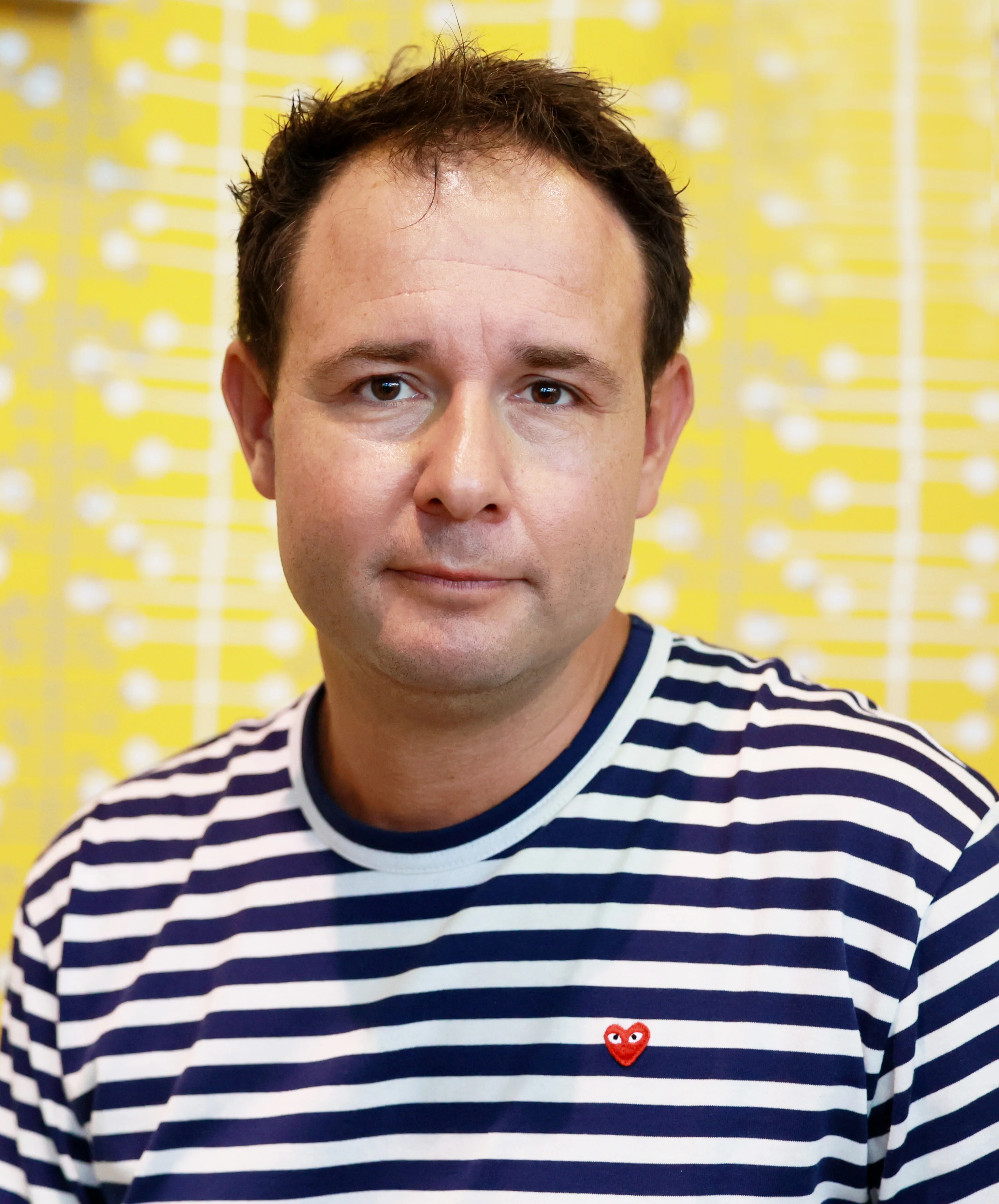
Image from Wikipedia
Image from Wikipedia
Alexander Oetker – Reporter, Novelist, France Expert
A storyteller of the south: How Alexander Oetker connects crime, cuisine, and culture
Alexander Oetker, born on March 20, 1982, in East Berlin, combines a dual musical career of words: precise journalistic reporting and literaryly crafted novels. As a long-time France correspondent and columnist, he writes about politics, society, and enjoyment, while simultaneously shaping an unmistakable narrative soundscape as a bestselling author with his series featuring Luc Verlain, Commissaire Lacroix, Sofia Perikles, as well as the thrillers "Zara & Zoë." Under the pseudonyms Alex Lépic, Yanis Kostas, and Pietro Bellini, he expands his artistic development and experiments with new tonalities in crime fiction. His books have received multiple awards and are regularly featured on bestseller lists.
Oetker's career began in journalism; early on, he was drawn to Paris, where he reported as the youngest France correspondent in German television history for RTL and n-tv. This experience shaped his stage presence during readings, his confident voice as an author, and his sense of dramaturgy. Today, he is regarded as a literary chronicler of “Savoir-vivre” – with stories that appeal to the senses and are nonetheless precisely composed.
Biography: From the newsroom to Nouvelle-Aquitaine
Growing up in Prenzlauer Berg and Wandlitz, Oetker began writing short stories as a teenager and worked journalistically starting in 1998. In 2008, he took over the Western Europe studio of the RTL media group in Paris, reporting for RTL, n-tv, and VOX, later serving as a political correspondent in Berlin – and since 2021, back on air as a France expert. At the same time, he deepened his artistic development in literary writing: in 2017, he debuted with "Retour. Luc Verlain's First Case," an atmospherically dense Aquitaine crime novel that quickly reached bestseller status. His closeness to French everyday culture, cuisine, and landscapes has since shaped the tone of his novels – sensual, precise, with narrative economy.
Oetker writes under his own name and as Alex Lépic (Paris Lacroix series), Yanis Kostas (Cyprus crime series featuring Sofia Perikles), and Pietro Bellini (Signora Commissaria series). This polyphony allows him to orchestrate different registers – from "slow crime" to high tension – without losing the hallmarks of his prose: clear composition, precise milieu depiction, culinary nuances, and the French way of life.
Career Highlights: Journalistic Insight, Novel Craft, Culinary Journalism
The journalistic school sharpened Oetker's sense of rhythm, timing, and research. His reports and analyses about France provide context, devoid of pathos, with precise observation. He translates this experience into his novels: he composes characters like motifs, places conflicts as crescendos, and uses locations as resonance chambers. As a columnist and France correspondent for the culinary magazine "Der Feinschmecker," he tests restaurants and hotels across Europe, intertwining travel, cuisine, and society – an interdisciplinary perspective that makes his literary arrangements audible.
With "Chez Luc: Exploring France's Culinary Southwest with Commissaire Verlain," Oetker achieved a crossover of travel literature, cuisine, and crime cosmos. The book won several prestigious awards; it showcases his expertise in composition, arrangement, and the production of texts that transcend the genre.
Bibliography and Series: The Sound Colors of the South
Luc Verlain (Hoffmann und Campe): The Aquitaine crime novels – from "Retour" (2017) through "Château Mort," "Winter Oysters," "Basque Tragedy," "Rue de Paradis," "Sea of Stars," "Revenge," to "Wild Vine" (2024) – continuously combine the scales of cuisine, landscape, and investigative work. "Wolfstal" was released in 2025, followed by "Strandgut" in 2026. The cycle functions like a suite: each volume is a sentence that picks up and varies motifs, always in the distinctive sound color of Southwestern France.
Alex Lépic – Commissaire Lacroix (Kampa Verlag): The Paris series – "Lacroix and the Dead from Pont-Neuf" (2019) to "Lacroix and the River Fisherman from the Seine" (2026) – is a homage to Georges Simenon's Maigret cosmos. Lacroix investigates as a flâneur, relying on intuition rather than digital tools – "Slow-crime" in the best sense: decelerated, atmospheric, precise in the arrangement of scenes and voices.
Yanis Kostas – Sofia Perikles (Atlantik): Cyprus as a vibrant resonance space of European present: "Death at Aphrodite's Rock" (2019), "The Treasure of Bellapais" (2022), and "Cypriot Secrets" (2025) guide a young investigator through political, historical, and familial upheavals – grounded, attentive to nuances.
Pietro Bellini – Signora Commissaria: Italian setting, Mediterranean light and shadow – "Signora Commissaria and the Dark Spirits" (2020), "... and the Laughing Death" (2024), "... and the Cold Revenge" (2025) showcase Oetker/Bellini as an arranger of suspense, irony, and regional color.
Novels Beyond Crime: Love, Travel, Life Feeling
With "Wednesdays at the Sea" (2021), Oetker composes a love story in a nostalgic style: reduced score, strong theme, gentle instrumental undertones. The novel was awarded the DELIA Literature Prize in 2022. Other prose volumes like "Sundays at the Beach" (2023) and "Silent Night in the Snow" (2023) vary the motif of closeness, time, and place; "Nice to meet you, Paris!" (2023) and "A Guide to Bordeaux and the Atlantic Coast" (2020) consolidate travel and city experiences in a handy format. In 2025, the essay collection "Life Can Be So Beautiful" followed, outlining the Dolce Vita principle as an attitude toward the world.
These works reflect Oetker's range: from tightly-timed thrillers to broadly sweeping love stories; his love for French and Mediterranean culture, culinary details, and precise topographies always remain present.
Style, Technique, Classification: Slow-Crime, Culinary Arts, Topography
In style analysis, Oetker's economy of means stands out: he sets accents like rhythms, layers sensory impressions as a harmonious progression, and relies on the dynamics of precise dialogues. His "production" – from plot arrangement to scenes – favors clear structures that allow the atmosphere to breathe. The intense incorporation of gastronomy and wine is more than just decoration; it serves as the semantic backbone of character psychology and as a historically-cultural anchoring of places.
In literary history, the series positions itself within the spectrum of Francophile regional crime to urban "slow crime" in the spirit of the Maigret tradition. Critical receptions acknowledge the homage quality, the Paris topography, and the life feeling; individual voices discuss the question of clichés – a debate that productively accompanies Oetker's texts and marks their place in the genre canon.
Awards and Reception: Authority Through Quality
Oetker received the DELIA Literature Prize in 2022 for "Wednesdays at the Sea." His culinary work "Chez Luc" won the ITB Book Award (Travel Cookbook) in 2023, the Swiss Gourmetbook Award (Silver), and the Gourmand World Cookbook Award ("Best in the World," category Countries/Regions French). Additionally, in 2022, he received the Franco-German Friendship Prize from Saarland. These awards underline the authority of an author who combines practical experience, expertise, and narrative elegance.
In the music of literature – rhythm, tonality, motif development – Oetker provides a distinctive signature. Praise and criticism from the specialist press (including references to "slow crime" qualities, travel guide sensibilities, culinary density) attest to the cultural resonance of his work in crime literature and travel/enjoyment culture.
Current Projects 2024–2026: New Cases, New Colors
With "Wild Vine" (2024) and "Wolfstal" (2025), Oetker expanded the Aquitaine cycle with Luc Verlain; "Strandgut" followed in 2026. Concurrently, the Paris Lacroix cycle as Alex Lépic grew until "Lacroix and the River Fisherman from the Seine" (2026). In the Mediterranean palette: "Cypriot Secrets" (2025) temporarily concludes Sofia Perikles' recent trilogy; "Signora Commissaria and the Cold Revenge" (2025) continues the Italian strand. Additionally, Oetker has presented an essay composition on the Dolce Vita principle – a thematic bridge between reportage, travel, and novels with "Life Can Be So Beautiful" (2025).
The musicality of his storytelling – tempo, pauses, crescendos – remains the red thread; the themes condense: home and distance, memory and present, cuisine as a cultural technique, Europe as a stage. Those who read Oetker hear France and the south – without notes, yet with a clear melody.
Cultural Influence: Telling Europe – Sensually and Precisely
Oetker popularizes France, Paris, the Atlantic coast, and the Mediterranean region with a mix of literary empathy and journalistic accuracy. His crime novels function as emotional travel guides: they make topographies readable, kitchens experiential, and mentalities understandable. In this way, he enhances – also through his media presence – interest in European everyday culture, regional cuisines, and the nuances of urban spaces.
At the same time, his authorship shows that genre literature can be a high compositional art: crime action as structure, cuisine as color theory, dialogue as rhythm. This connection shapes a style that is now distinctly recognizable and has an impact beyond the boundaries of crime fiction.
Conclusion: Why Read Alexander Oetker Now – and Experience Him Live?
Alexander Oetker combines experience, expertise, and narrative authority: he masters the tools of journalism, the composition of novels, and the sensual world of cuisine. His books resonate with the sea, market, and metro – precisely researched, elegantly arranged, and reliably substantiated. Those seeking contemporary European narrative voices that productively connect enjoyment and society will find a distinctive voice here.
Live, Oetker unfolds a special stage presence: readings become encounters with places, dishes, and characters – a journey through sound, scent, and dialogue. Recommendation: Secure tickets early, sharpen your senses – and immerse yourself in the south of his stories.
Official Channels of Alexander Oetker:
- Instagram: No official profile found
- Facebook: No official profile found
- YouTube: No official profile found
- Spotify: No official profile found
- TikTok: No official profile found
Sources:
- Alexander Oetker – Official Website: The Author
- Alexander Oetker – Official Website: Books (Series & Title Overview)
- Wikipedia – Alexander Oetker (Biography, Works, Awards)
- Hoffmann und Campe – Gourmand World Cookbook Award for "Chez Luc" (Press Info)
- DELIA – Previous Award Winners (DELIA Literature Prize 2022)
- Kampa Verlag – Program Preview (Alex Lépic / Lacroix Series)
- Der Feinschmecker – Reference to Columns/Correspondence (via Oetker's Website)
- n-tv – Contribution by/with Alexander Oetker (Correspondent Work)
- Wikipedia: Image and Text Source
Upcoming Events
Reading with Alexander Oetker - French Evening