Time Travel through Amberg: History in Old Photos
Time Travel through Amberg: Old Photos, Stories & People – Upcoming Dates & Formats 2026
If you want to discover Amberg through pictures and stories, you will find several announced and regularly published formats in 2026: photo walks with before-and-after motifs, curated exhibition visits, moderated archive evenings, and thematic city tours that are based on historical photo collections and personal memories. This article brings together the most important future opportunities and shows how you can plan your visit to experience as much "Amberg in Pictures" as possible.
Photo Walks & Re-photography: Amberg in Before-and-After Comparison
Photo walks with re-photography are particularly attractive in 2026 because they combine three things: movement, image literacy, and a shared discussion about perspectives. The typical program (as frequently announced for 2026) consists of:
- Motif Briefing: You receive a selection of historical image motifs in advance or at the starting point (printout, booklet, or digital).
- Route Sections: At prominent locations, an attempt is made to reconstruct the image section and focal length as similarly as possible.
- Mini Evaluation: At the end, selected pairs ("then/now") are viewed together.
How to Get the Most Out of a Photo Walk in 2026
- Bring two "perspectives": one for reproduction (as exact as possible) and one for a free interpretation focusing on people, details, or light.
- Choose a consistent setup: A smartphone is completely sufficient; helpful are grids/guides and a fixed focal length (e.g., 1×) for consistent before-and-after pairs.
- Note image data: Location (street/square), time, weather, motif name. This increases the value of your series for later exhibitions or club projects.
City Museum & Exhibitions: Curated Image and Object Formats
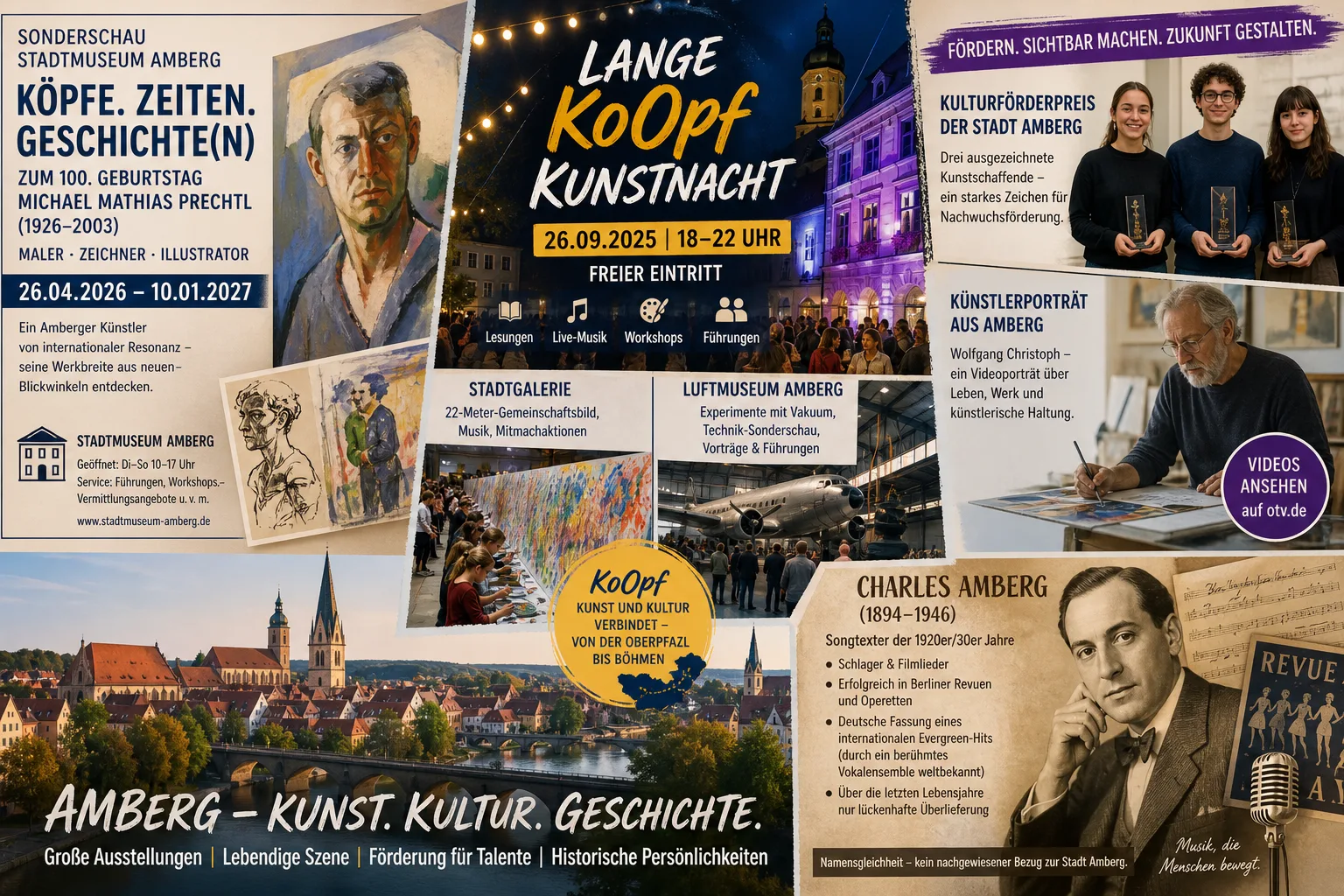
For 2026, program points are typically announced in the environment of the city museum and other cultural venues that are particularly suitable for a "time travel": themed tours focusing on city views, object stories, photo collections, and the question of how images shape our understanding of the city.
Which Formats You Should Specifically Look for in 2026
- Curator's Tour (Focus on Image Sources): A tour that explains how photos are classified, dated, and contextualized in exhibitions.
- Evening Opening / Theme Evening: An event that offers more time for questions, comparisons, and discussions than a standard tour.
- Family Format: An offer that uses image details (signs, clothing, traffic, shop windows) as a search task and thus connects generations.
If you only want to choose one event in 2026, a tour followed by your own photo round is ideal: First, you receive a curated "visual training," then you implement it outside in your own image series.
Image Archives & Participation Evenings: Slides, Albums, and City Memory
Participation evenings around photo collections are particularly valuable in 2026 because they not only show images, but also bring people together who recognize places, add names, and explain everyday details. Such events are often announced as moderated viewings, discussion evenings, or collection campaigns.
What You Can Bring to an Archive or Memory Evening
- Your own photos (originals or scans): ideally with rough time indication and location.
- Context notes: Who is visible? What situation? What was the occasion?
- Clarify consent: If people are recognizable, check with the organizer in advance how rights and consents are handled.
Well-organized participation formats in 2026 usually work with clear rules for image use (e.g., "viewing on site only", "publication only after approval"). This strengthens trust and protects participants.
Thematic Tours: Stories Along a Route
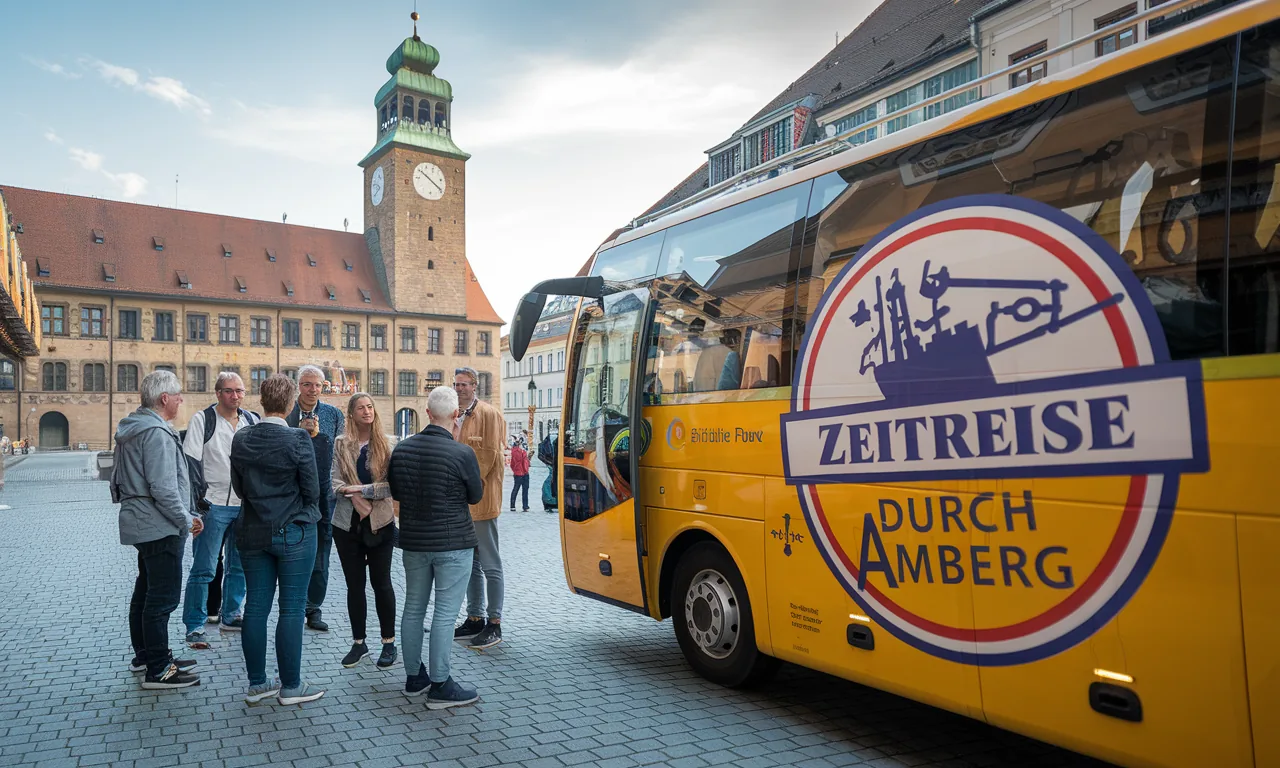
Thematic tours with image reference are one of the most low-threshold ways in 2026 to experience Amberg as an "image and narrative space." The added value arises from the fact that photos are not viewed in isolation, but anchored at locations: An image is shown, the group stands at the appropriate spot, and the narrative connects motif, viewing direction, and surroundings.
How to Recognize a Good Photo-Oriented Tour in 2026
- Traceable source information: The tour names the collection from which reproductions originate (museum, archive, collection).
- Clear dramaturgy: Fewer stops, but more time for comparison ("then/now") and questions.
- Transparency in uncertainties: If a motif is not clearly dated, this is named as an uncertainty—not presented as a fact.
Planning tip for 2026: Combine a tour in the early day with your own photo walk in the afternoon. This keeps impressions fresh and allows you to implement motifs directly in practice.
Planning: How to Design Your Own Time Travel (2026)
So that a nice walk in 2026 becomes a real, well-documented time travel, a simple three-part plan helps: Source (images), Route (places), Narrative (context).
1) Source: Find a Set of Motifs
For 2026, consciously choose a manageable set: 10–15 historical motifs are enough to create a strong before-and-after series. Use program material from exhibitions, photo books, or publicly announced archive evenings (if use is permitted).
2) Route: Set a Walking Path
Plan a route that can be walked comfortably in 60–120 minutes. A shorter route often delivers better images because you have time for perspective, image section, and repetitions.
3) Narrative: Record Your "Accompanying Texts"
Write down two sentences per motif: (a) what dominates in the image (e.g., building, street space, people), (b) what you perceive at the same spot today. These mini-texts make your series in 2026 suitable for exhibition and sharing.
Accessibility & Practical Information
- Weather & Light: For before-and-after photos, it is worth consciously choosing the time of day in 2026. Soft light (morning/late afternoon) reduces harsh shadows.
- Mobility: If you are traveling with a wheelchair, walker, or stroller, prefer tours or routes that are explicitly described as accessible in the event text.
- Data protection: For portraits in public spaces in 2026: Pay attention to personal rights. If in doubt, ask for consent from identifiable individuals or photograph in such a way that no identification is possible.
- Tickets & Registration: Many photo and archive formats work with limited spaces. Check the registration deadlines in the official program entry.